R Language Service
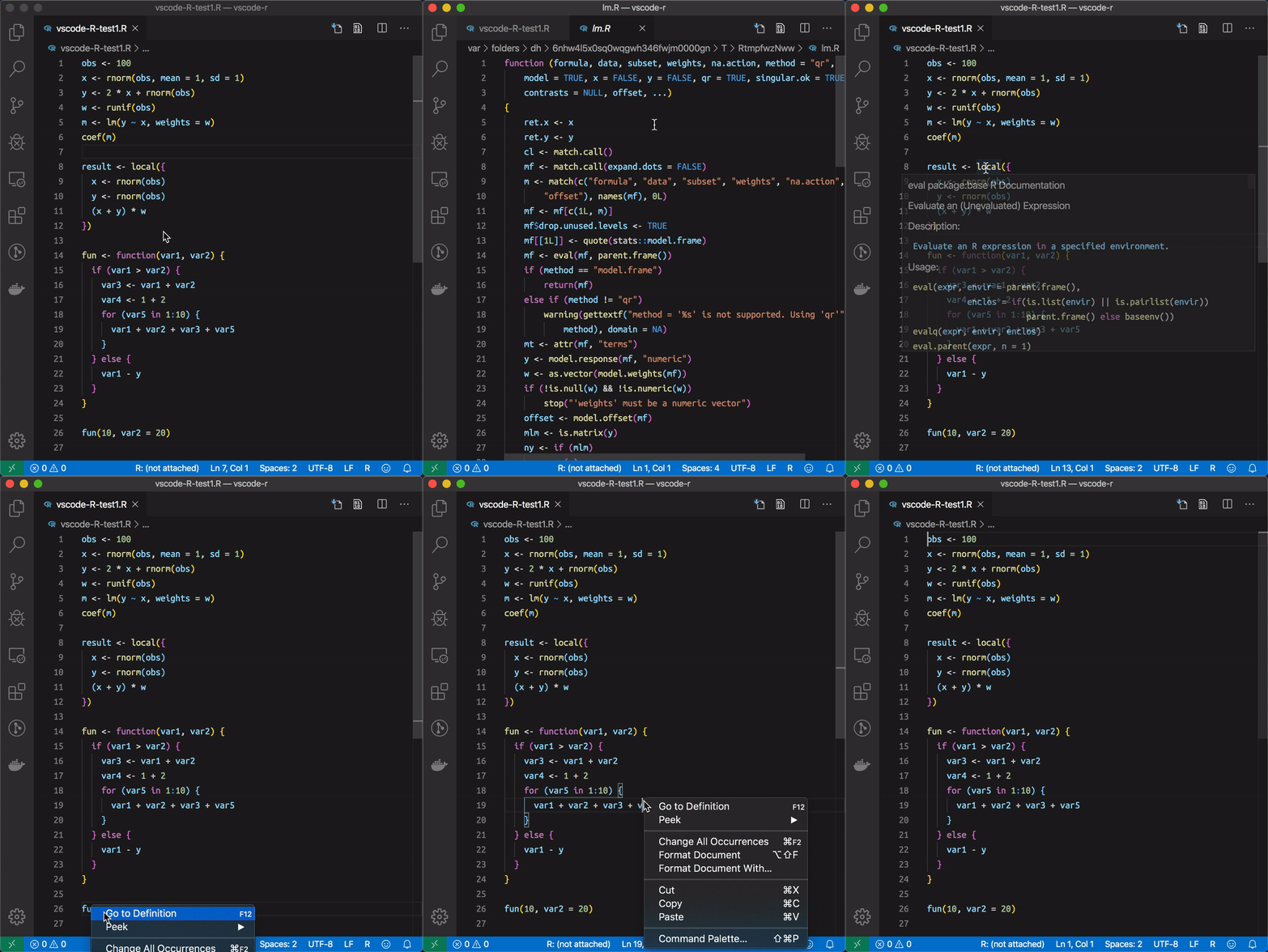
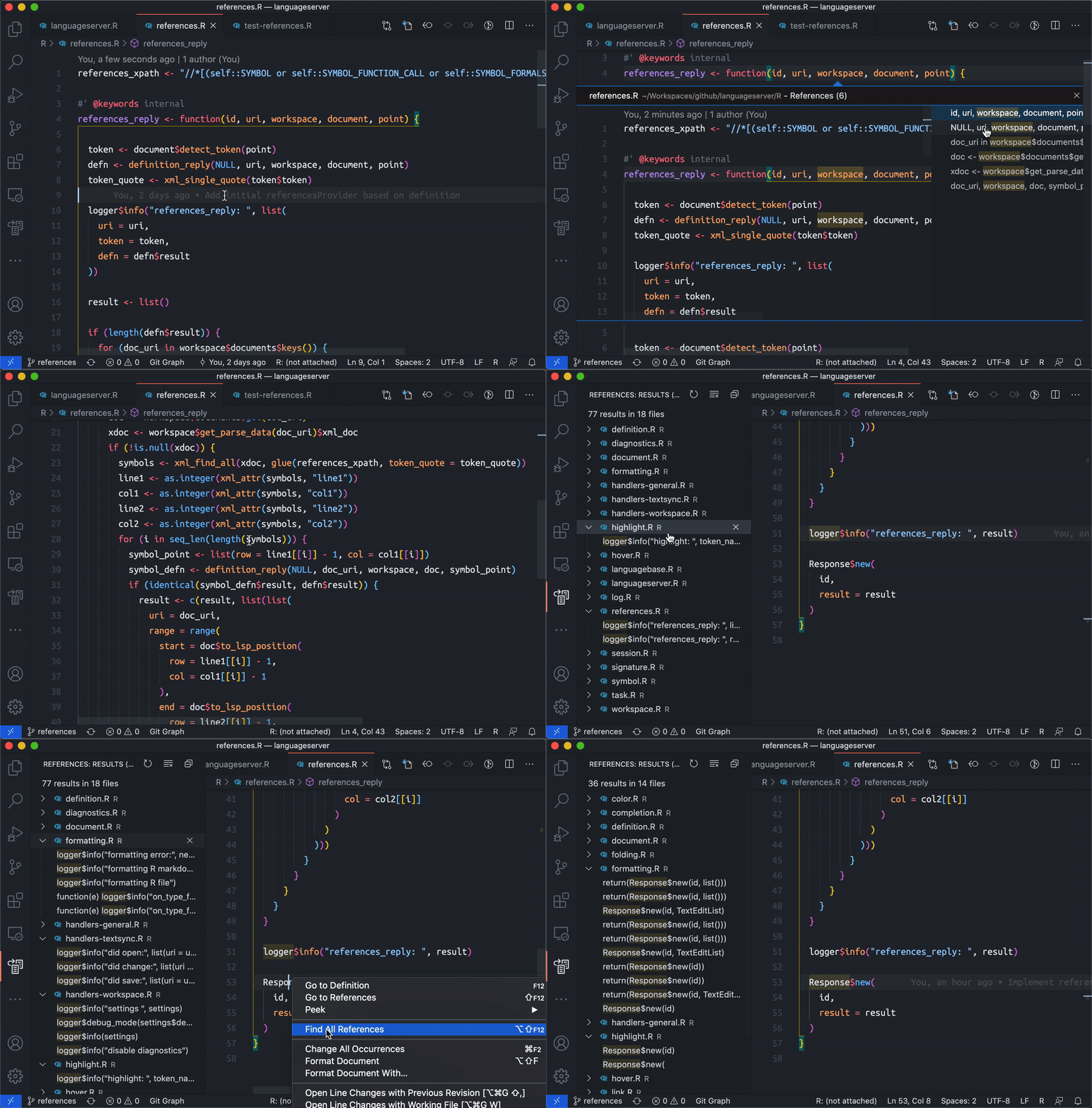
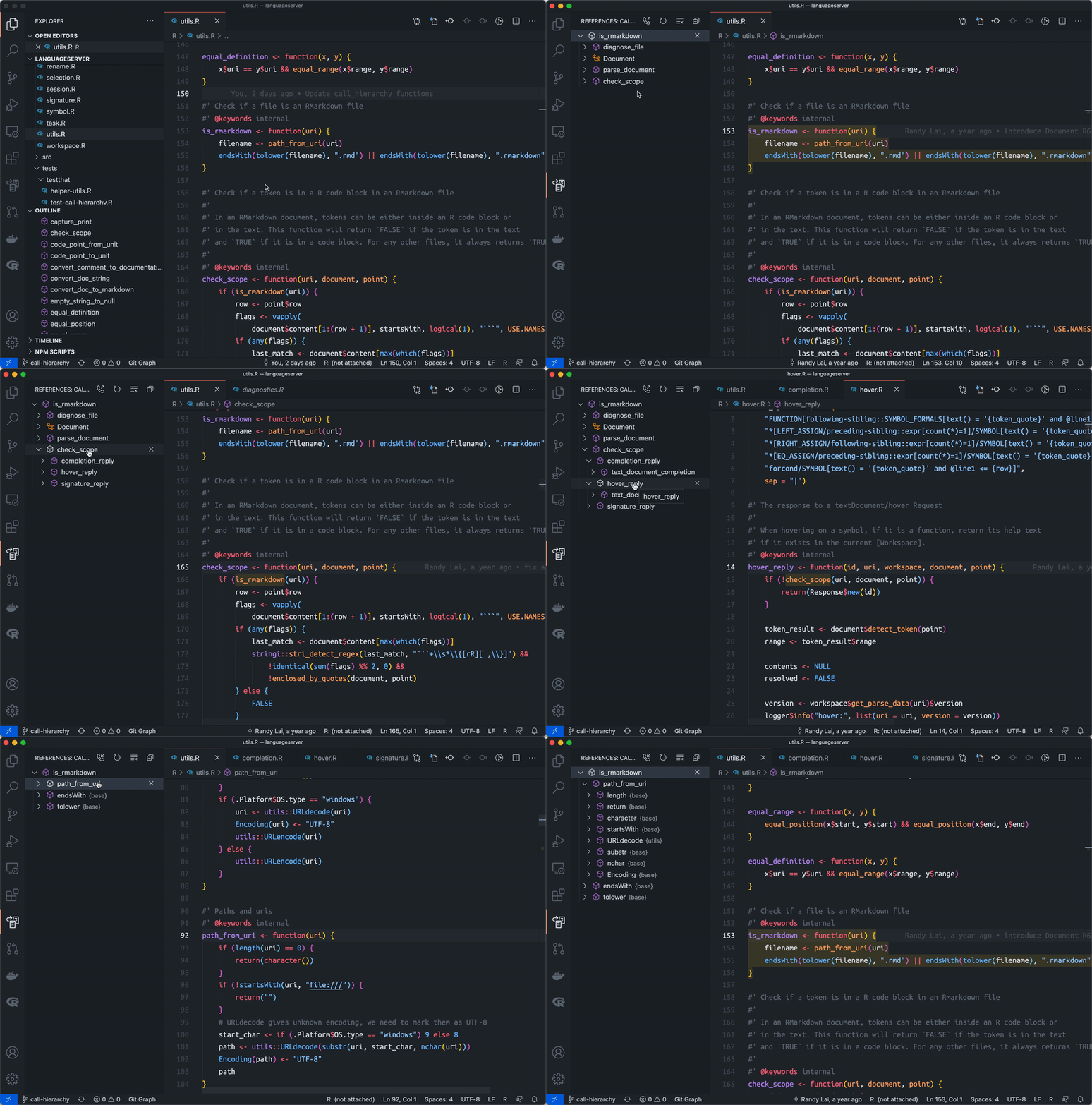
The R language service implements the Language Server Protocol and provides a set of language analysis features such as completion, signature, hover, definition, references, diagnostics, etc.
The language service is provided by the R language server (implemented by languageserver) which performs static code analysis with the latest user documents in R and Rmd languages. Therefore, it does not rely on an active R session and thus does not require the code to be executed.
To install the package from CRAN:
install.packages("languageserver")To experience the latest features, install the package from GitHub:
remotes::install_github("REditorSupport/languageserver")The following settings could be set up to deviate from the default behavior:
-
r.lsp.enabled: Enable the R language service (default). -
r.rpath.windows,r.rpath.mac,r.rpath.linux: Path to R binary for launching the R Language Server package (see below). Examples:/usr/bin/R(Linux/macOS),C:\\Program Files\\R\\R-4.1.0\\bin\\x64\\R.exe(Windows). If the settings are left blank (default), then the R path will be detected from thePATHenvironment variable and Windows registry. It should be vanilla R rather than radian console. -
r.lsp.args: The command line arguments to use when launching R Language Server. Example:--vanillato disable loading startup scripts such as.RprofileandRprofile.site. -
r.lsp.debug: Enable debugging traces. Defaults tofalse. Set this totrueif you are having trouble getting the Language Server working. -
r.lsp.diagnostics: Enable linting of R code, using the lintr package. Defaults totrue. To disable this, you must have at least version 0.2.7 of the R Language Server installed.