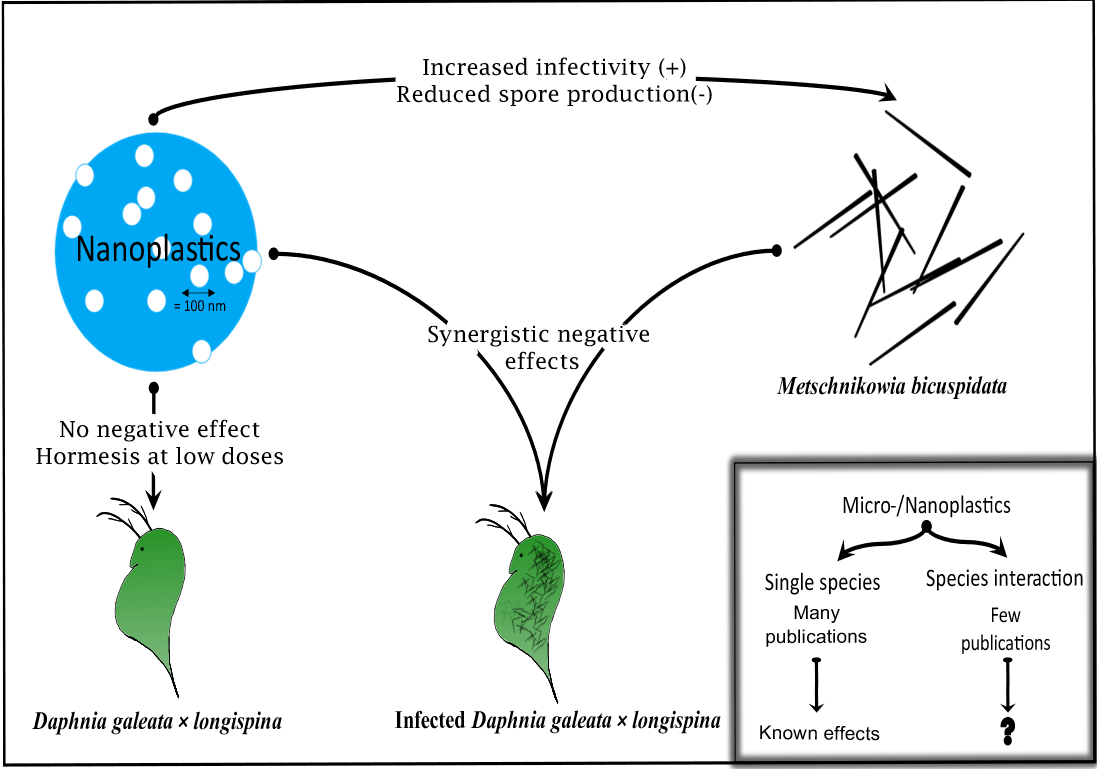
Widely abundant micro- and nanoplastics pose a threat for aquatic ecosystems. Despite the extensive knowledge on their effects at the species level, however, the way they affect interactions between species remains largely unexplored. We studied the effects of polystyrene nanoplastic beads (100 nm) on host-parasite interactions by exposing the waterflea Daphnia galeata × longispina to the virulent parasitic yeast Metschnikowia bicuspidata, under two different nanoplastic concentrations: 5 and 20 mg/L. Both concentrations of nanoplastics increased the proportion of infected hosts; at the highest concentration, however, elevated rates of host mortality and lower spore production cancelled out the parasite’s advantage. Thus, parasite success was highest greatest at the low est levels of nanoplastic contamination. Given that parasitism is an ubiquitous lifestyle in nature, and that parasites can play important roles in the shaping and functioning of ecosystems, these results highlight the importance of including interactions between host species and their parasites as alternative ecotoxicological endpoints to better assess the ecological consequences of plastic pollution.
ggplot2  3.3.6
dplyr    1.0.9
survival 3.3.1