Given a binary tree, each node has value 0 or 1. Each root-to-leaf path represents a binary number starting with the most significant bit. For example, if the path is 0 -> 1 -> 1 -> 0 -> 1, then this could represent 01101 in binary, which is 13.
For all leaves in the tree, consider the numbers represented by the path from the root to that leaf.
Return the sum of these numbers.
Example 1:
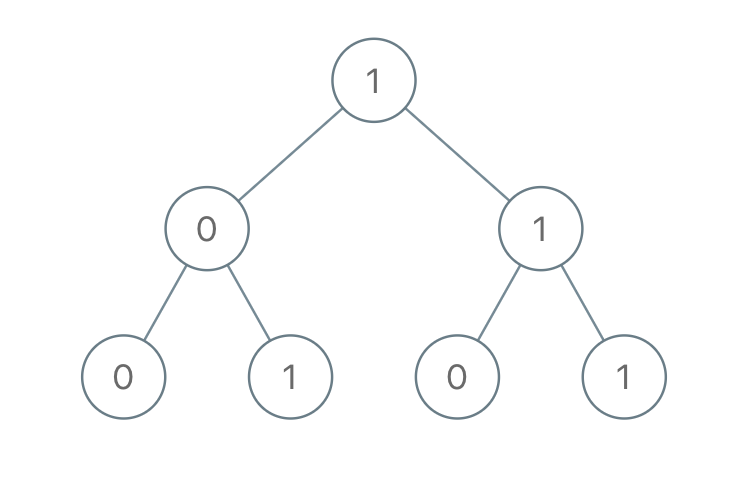
Input: [1,0,1,0,1,0,1]
Output: 22
Explanation: (100) + (101) + (110) + (111) = 4 + 5 + 6 + 7 = 22
Note:
- The number of nodes in the tree is between
1and1000. - node.val is
0or1. - The answer will not exceed
2^31 - 1.
Companies:
Amazon
Related Topics:
Tree
// OJ: https://leetcode.com/problems/sum-of-root-to-leaf-binary-numbers/
// Author: github.com/lzl124631x
// Time: O(N)
// Space: O(H)
class Solution {
    int ans = 0;
    void preorder(TreeNode *root, int path) {
        if (!root) return;
        path = (path << 1) + root->val;
        if (!root->left && !root->right) {
            ans += path;
            return;
        }
        preorder(root->left, path);
        preorder(root->right, path);
    }
public:
    int sumRootToLeaf(TreeNode* root) {
        preorder(root, 0);
        return ans;
    }
};
Or
// OJ: https://leetcode.com/problems/sum-of-root-to-leaf-binary-numbers/
// Author: github.com/lzl124631x
// Time: O(N)
// Space: O(H)
class Solution {
    int sum = 0;
public:
    int sumRootToLeaf(TreeNode* root, int path = 0) {
        if (!root) return 0;
        path = (path << 1) + root->val;
        if (!root->left && !root->right) sum += path;
        else {
            sumRootToLeaf(root->left, path);
            sumRootToLeaf(root->right, path);
        }
        return sum;
    }
};