CassavaHealth AI is a machine learning project focused on improving cassava plant health by accurately diagnosing various leaf diseases. Built using a "One-vs-All" methodology and EfficientNet B4, this solution not only boosts detection accuracy but is also accessible through an Android application, making it a valuable tool for farmers globally.
- Advanced CNNs: Utilizes EfficientNet B4 for robust image classification.
- Binary Classifiers: Incorporates a "One-vs-All" strategy for detailed disease analysis.
- Android Integration: Mobile application available for practical, field-level usage.
- High Accuracy: Proven effectiveness on skewed real-world data, reflecting typical agricultural scenarios.
To get a local copy up and running follow these simple steps:
- Python 3.8+
- Jupyter Notebook or JupyterLab (for running
.ipynbfiles)
# Clone the repo
git clone https://github.com/VaradhKaushik/CassavaHealth-AI.git

# Navigate to the 'Code' directory within the cloned repository
cd CassavaHealth-AI/Code

# Install required packages
pip install -r requirements.txt

# Run the Jupyter Notebook
jupyter notebook one-vs-all.ipynbIt is recommended to use a virtual environment for Python projects to avoid conflicts between package versions. Follow these steps to set up and activate a virtual environment:
# Install virtual environment if you don't have it
pip install virtualenv

# Create a virtual environment
virtualenv venv

# Activate the virtual environment
# On Windows
venv\Scripts\activate
# On macOS and Linux
source venv/bin/activateDownload the APK, install it on your Android device, and follow the on-screen instructions to analyze cassava leaf images directly.
CassavaHealth AI trains on a dataset of cassava leaf images, where each image undergoes preprocessing and augmentation before classification. Each of the five diseases has a dedicated binary classifier, ensuring high precision and reliability.
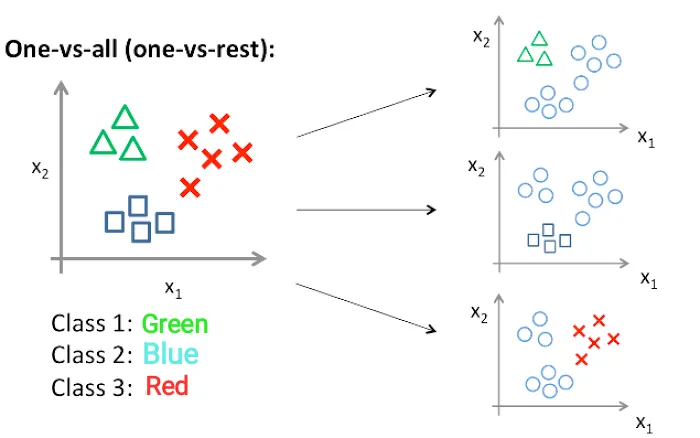
Image taken from: https://sites.cc.gatech.edu/classes/AY2016/cs4476_fall/results/proj4/html/jnanda3/index.html