AFE using MCP6002 op-amp - Design #5 #63

Replies: 9 comments 43 replies

-
|
Hi FHDM-dev, I just ordered the MCP6292 and RPu - I saw you pointed out for Design 1 how to change the resistors for 10x probes. Could you kindly point out for me, what I would need to change with this design? Many thanks for your awesome work! |
Beta Was this translation helpful? Give feedback.

-
|
That makes sense, though I think you should ignore the fact that there is a +/- 7V range on the schematic. You can choose whatever range you like and calculate the appropriate resistor values for that. Once you've entered the actual voltage range into the app it will show the correct value (ie. you don't need to wrongly configure it and you don't need to change the probe attenuation settings in the app). And for all the ranges you can choose to use either 10X or 1X probes when calculating the resistor values - you just can't switch between them. Here's some examples: +/- 70V range using 1X probes: +/- 32V range using 10X probes: +/- 32V range using 1X probes: In the examples above the 'Actual Input Range' values are the ones you enter into the app as 'Voltage range(s)'. As for not breaking things, I've never worked with voltages that high so I can't guarantee anything. |
Beta Was this translation helpful? Give feedback.

-
|
Thank you so much! Your dedication and support are truly remarkable, thank you! I'm now eagerly awaiting the arrival of the MCPs. |
Beta Was this translation helpful? Give feedback.
-
|
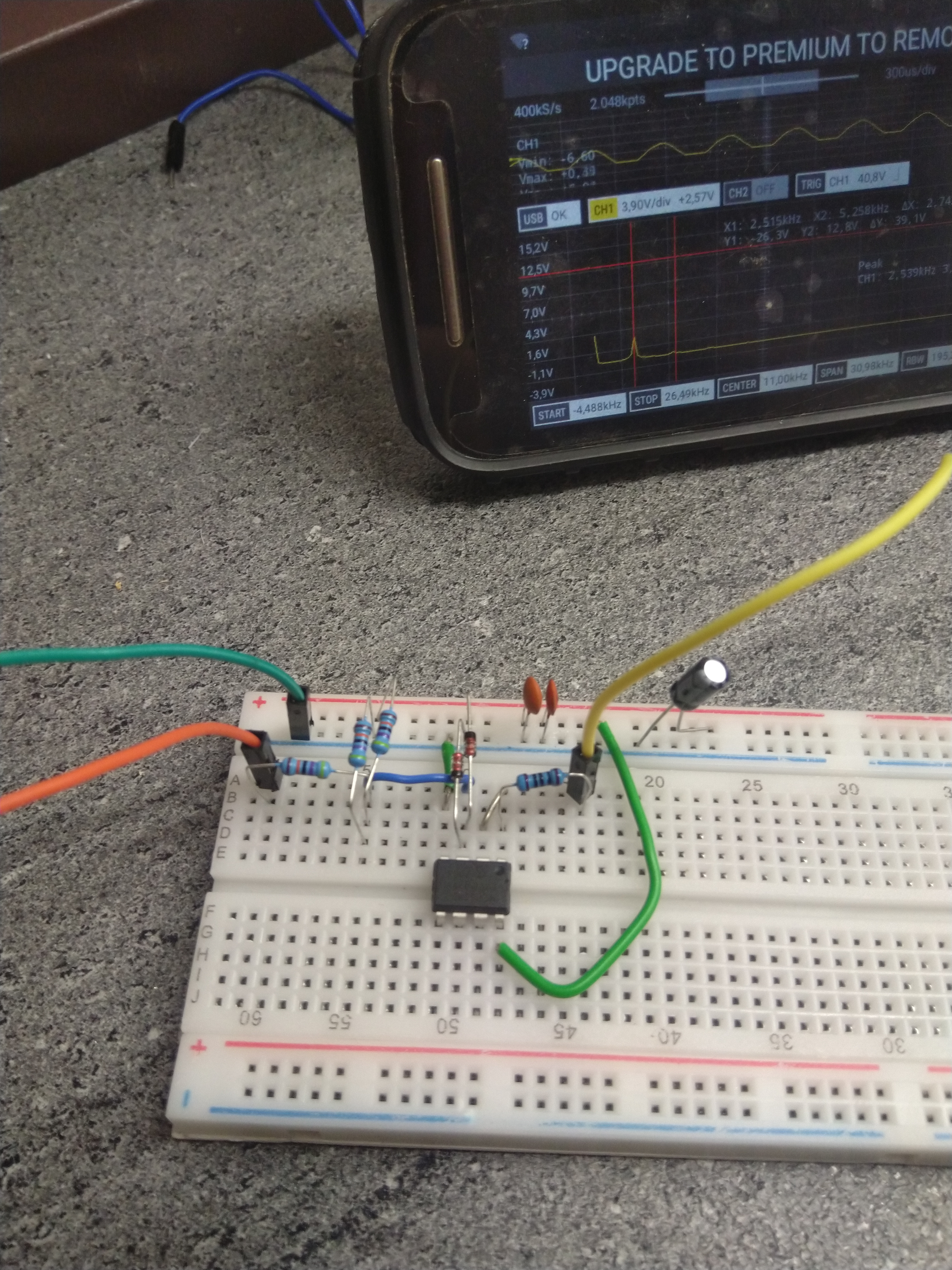
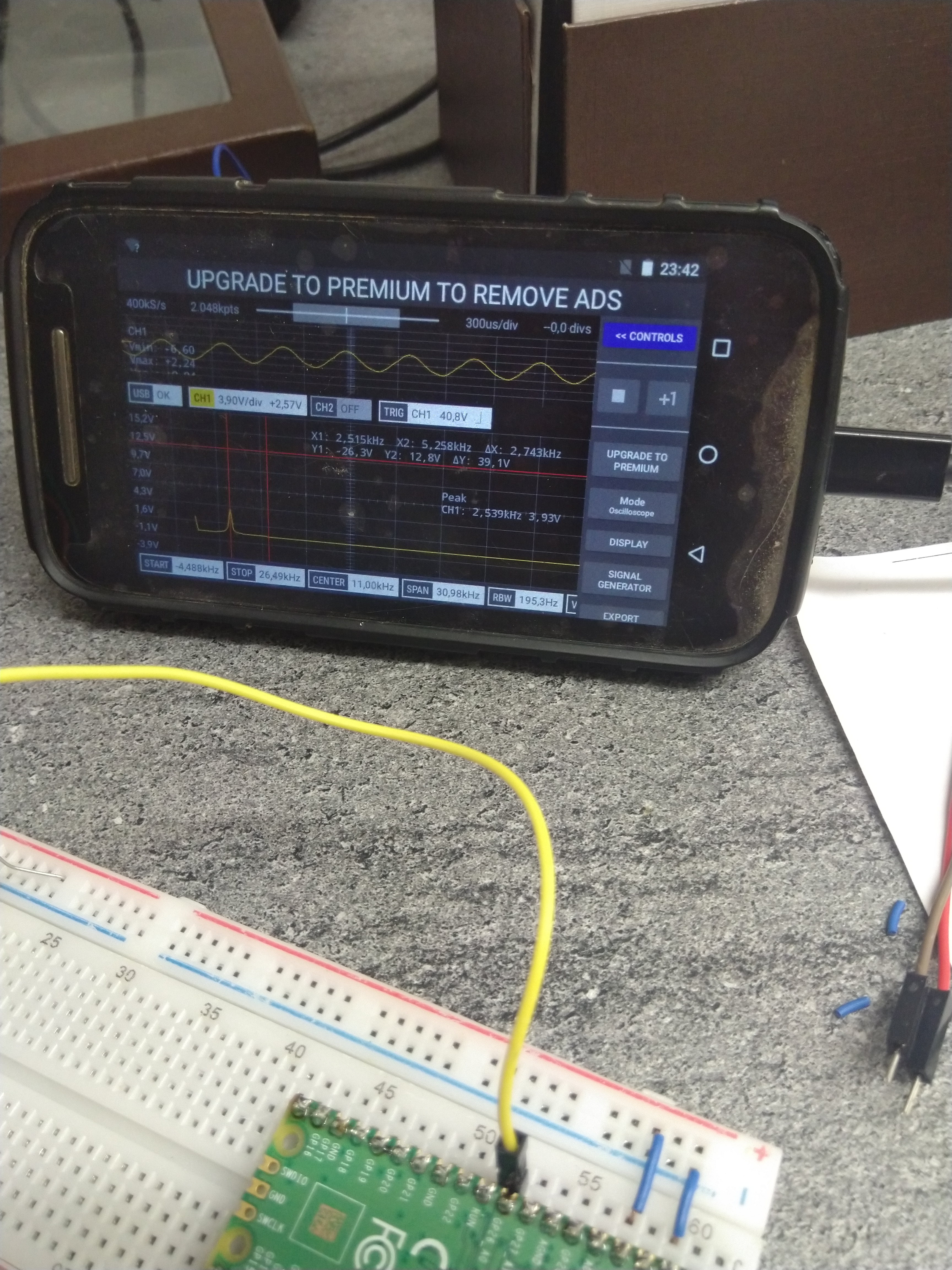
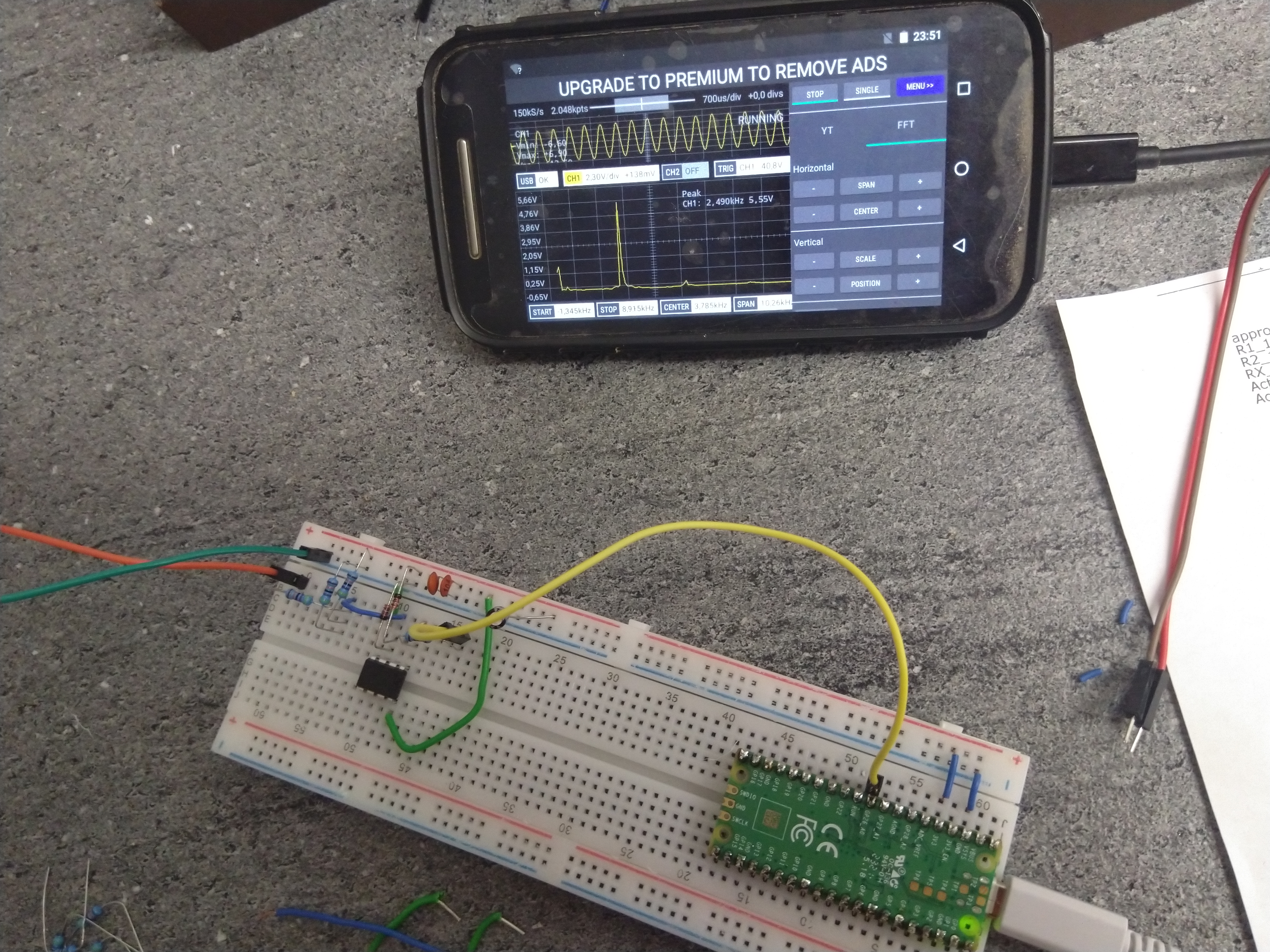
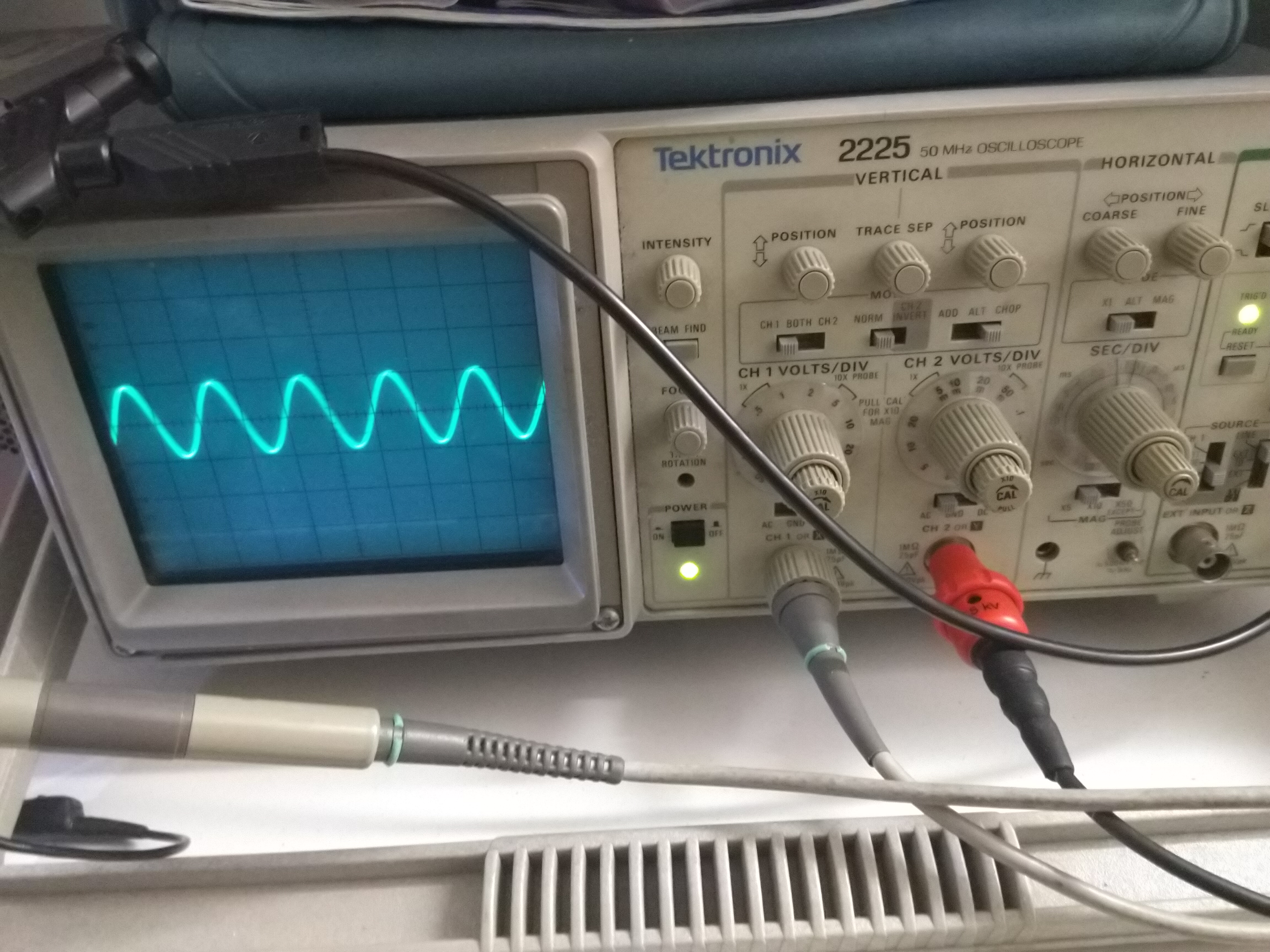
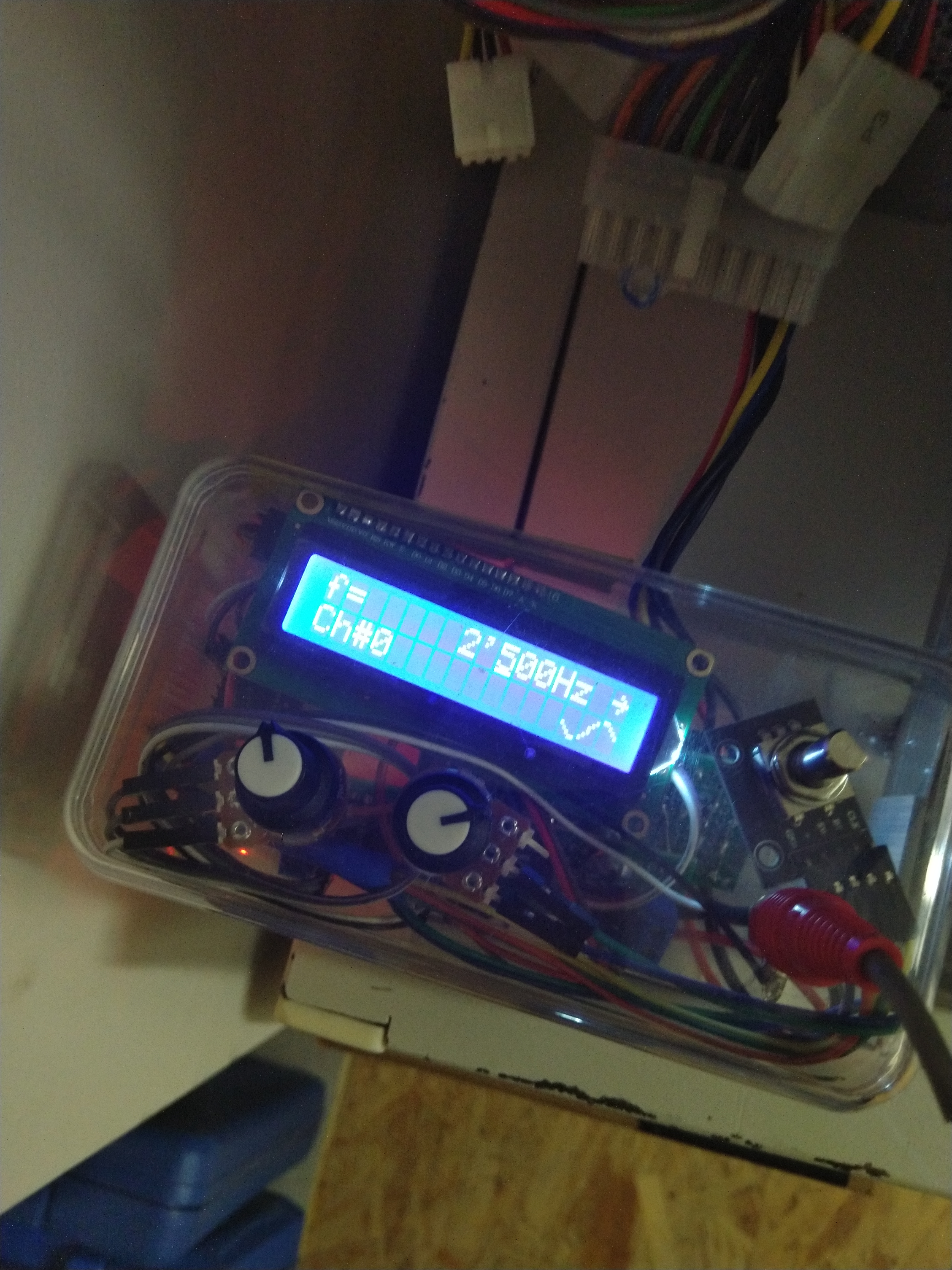
I finally found a free evening and it's working! I'm very excited about this. I tore down ch2 when leaving it unterminated seemed to obfuscate ch1 - I can't get play store to work on this old spare so I couldn't use it, anyway. Your input ranges seem to allow me to match what my uncalibrated old analog scope shows and the probe selection works as I would have hoped (I didn't add a bnc port for my 10x probes, yet). There seems to be a little bit of clipping in the troughs of the signal but nothing I worry about yet. I'm very glad FFT includes a simple V scale - with my noisy breadboard and jumper wires, the relative scale obfuscates what I'm looking for. Thanks again for the great instructions, the great apps, the great support! Let me know where you would like to see this make posted.
|
Beta Was this translation helpful? Give feedback.
-
|
Nice :) |
Beta Was this translation helpful? Give feedback.

-
|
Hack-a-day is great, it's just that they're just very anti-commercial, I presume because most people who go there work for big companies and they go to escape and do something hobbyist... so they don't want it to become just another site filled with ads for commercial products like their day job... or many electronics magazines. The fact that your project was mentioned there is a small miracle, and great! But I think its because of your interactions on github which is very much in the FOSS spirit. Their readership might not understand the difference between big and small projects... :-) Anyways, thanks again for building and sharing something so useful! |
Beta Was this translation helpful? Give feedback.

-
|
good day. i have had a look at the 5 designs you offer for the scope and i was wondering if it would be possible to build a scope with 2 inputs like in design number 5 but combine that with design number 4 where i can select between multiple voltage ranges for each channel. i am quite new to circuit design and id rather ask advise before making mistakes |
Beta Was this translation helpful? Give feedback.
-
|
Looks good. I think the 33V should be fine as long as your 3.3V rail can sink enough current if you accidently have the selector set to the wrong range (or worse - if it's in between ranges while the switch is being rotated). Regarding noise. You probably only need to worry about the high impedance part of the circuit (ie the non-inv input of the op-amp) - so I'd try and make the wires on that pole as short as possible. I'm not sure what else you can do about noise apart from adding some shielding. And thanks for sharing. I'm sure others will find this very helpful. |
Beta Was this translation helpful? Give feedback.

-
|
Hi, |
Beta Was this translation helpful? Give feedback.

-
|
Nice Idea! Anything wrong with just having 3 or 4 inputs per channel and just plugging in? I like the switch idea too. @ema987654 how did it turn out? What switch did you end up using? |
Beta Was this translation helpful? Give feedback.
-
|
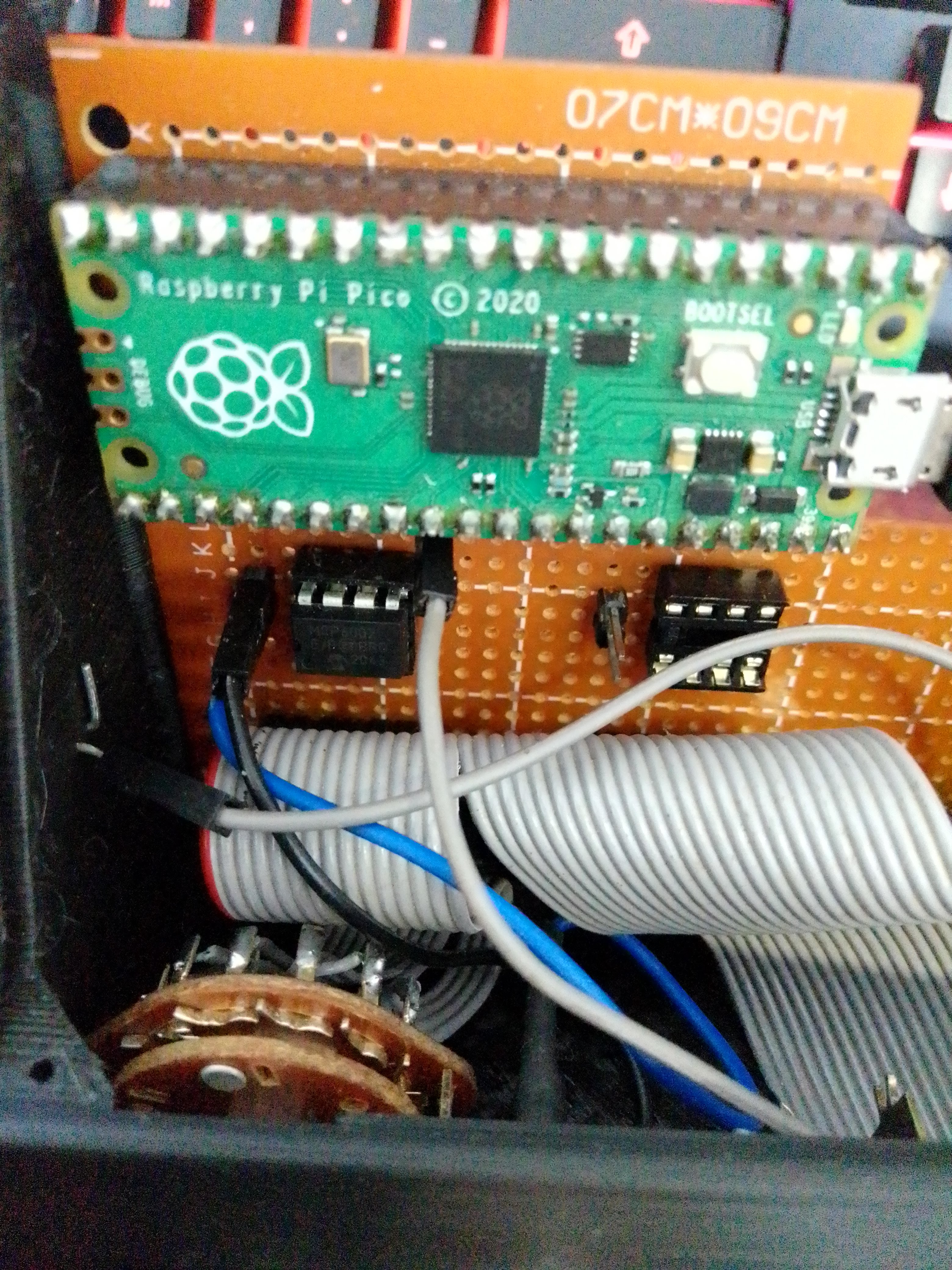
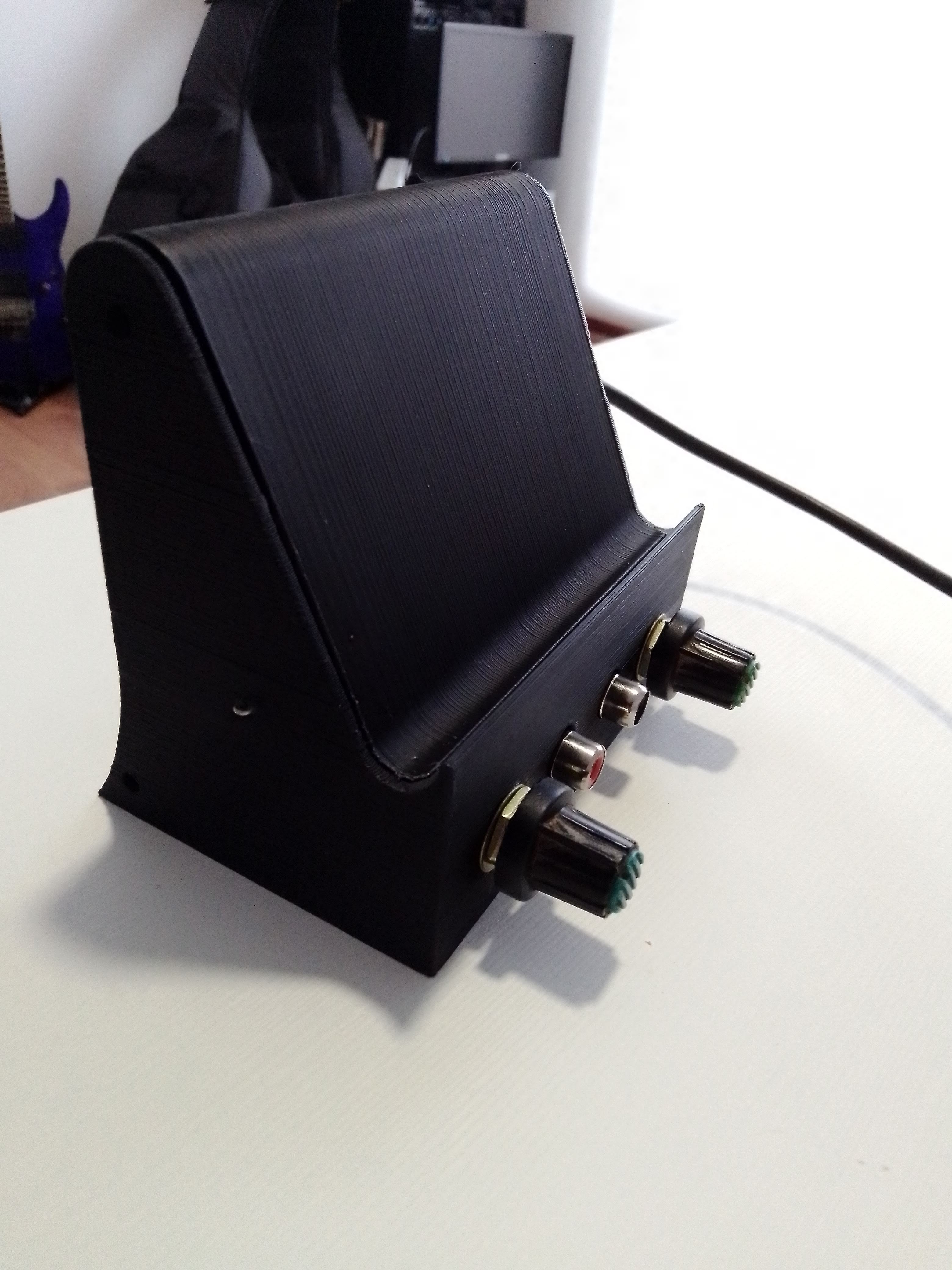
@SteveTinkers Sorry for the late reply. It worked great, I'm actually trying some signal compensation circuits to counter the ADC input capacity, but the circuit itself worked great. I have an experimental PCB, the sort that ends up being a working prototype and perhaps you never built the real thing given I have already designed and 3d printed a case LOL. The switch I've used is a rotary type, 4 positions, 3 poles. |
Beta Was this translation helpful? Give feedback.

-
|
May I know the size of the black casing for the circuit holder? @ema987654 |
Beta Was this translation helpful? Give feedback.

-
|
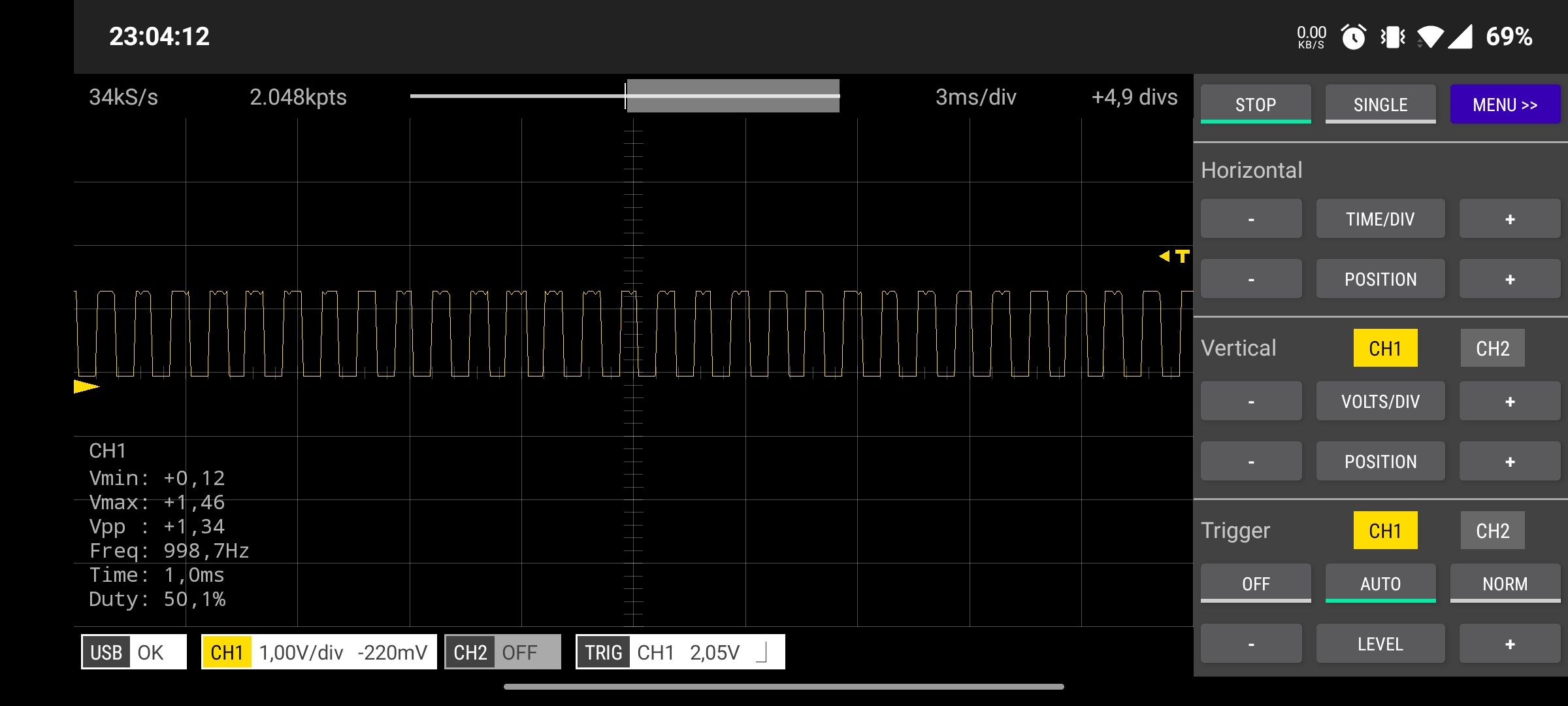
On the screenshot I'm using GP22 to generate 1khz signal |
Beta Was this translation helpful? Give feedback.

-
|
I ordered mcp6002s from Ali and they were not rail to rail. Definitely fakes. |
Beta Was this translation helpful? Give feedback.

-
|
hey. i have same problem with mcp6002 but there is microchip logo on it, are sure its a problem of manufacture? do you know what would be good replacment ? or what are the requirements for opamp. |
Beta Was this translation helpful? Give feedback.
-
|
The basic requirements are that it should work with a power supply of 3.3v, it should be rail-to-rail, have a GBW of at least 500kHz and be unity gain stable. |
Beta Was this translation helpful? Give feedback.
-
|
I got mcp6004 so I think to make 4 channels and swiching between them. And I heve noob questions:
|
Beta Was this translation helpful? Give feedback.
-
|
Nice. The MCP6004 should work fine 😄 Most oscilloscopes have an input resistance of 1M to prevent loading of the circuit being measured (that is, to prevent current flowing into the oscilloscope front-end and affecting the circuit under test). Having a high input resistance allows the oscilloscope to be able to accurately measure voltages when the output resistance of the circuit under test is relatively high. You don't want a large voltage drop across the output resistance of the circuit you are measuring because that would make the voltages shown in the oscilloscope too low. You could use lower values than those I've shown in the examples but a total input resistance of 2,66k is (IMHO) far too low. Hundreds of K is what I would aim for as a minimum. However, a higher input resistance will make the signal appear more noisy so you just need to get the balance right for your needs. GPIO2/3/4/5 all have pull-down resistors enabled (internal to the RP2040 IC). If they are not connected they will always read low. I believe a cd4053 would work. I normally use the 74HC versions of these switches because of the lower on-resistance. It will introduce some distortion but probably not enought to worry about. |
Beta Was this translation helpful? Give feedback.
-
|
Hi again @fhdm-dev how you've calculated the RX resistor values also what's the purpose of it? It will be very helpful if we got any explanation in the docs, formulas even better. |
Beta Was this translation helpful? Give feedback.
-
|
I assume you mean RF and RG. These are only needed for voltage ranges where the gain of the op-amp isn't unity. So yes, in the linked schematic they are only needed for channel 2 because for channel 1 the op-amp does have a gain of one. Even though the value of RF doesn't trend up or down consistently, the ratio of RF to RG does (ie. the gain does). RX is used to raise the voltage level so that a negative voltage applied to the 'scope becomes a positive voltage at the Pico ADC . If your input range doesn't include negative voltages then this isn't needed. Yes, I agree that R1=3600 and R2=1000 will give a range of 0V to 15.1V. No RX is needed. Regarding the capacitors, the MCP6002 datasheet suggests using two bypass capacitors which is why you see two in the schematic. However when I built the circuit I was lazy and didn't add the 2nd one - oops 😄 |
Beta Was this translation helpful? Give feedback.
-
|
Makes sense! So It's a simple standard voltage divider if you dont need negative voltages. How can I incorporate an RX in 15.1 circuit? Just to make things consistent so I can use about -15.1 too. I was looking at the above switch idea, it's interesting but add complexity and one more part. Anything wrong with just having 3 or 4 inputs per channel and just plugging in the needed range? I've thought about soldering everything together (because you mention permanent installation on a breadboard = noise) and keep the resistors swappable. I'd probably use 6V or 15V most often. If I find something is not detailed enough for lower voltage (1V/3V), swap em. What do you think? 1V, 6V, 15V, 30V (or even straight to 70) would cover LOTS of options. I'm assuming as the range gets higher it gets less accurate. I debate having a 3.3v direct to the diodes... |
Beta Was this translation helpful? Give feedback.
-
|
R1=680, R2=180,RX=150 will give you a range of -15.0 to +15.8 Yep, you could have multiple inputs per channel. If you want the correct voltage shown in the app you need to apply the appropriate logic level to the voltage range GPIOs so that the app knows which range you are using. You are right, as the range gets larger the accuracy decreases. As this is an 8-bit scope the vertical resolution is the range divided by 256. |
Beta Was this translation helpful? Give feedback.
-
|
Thanks! What calculation is that? Can I learn how you determined those resisters? I dont think I'll ever need to change them. Not sure why I'd use 11 v or 15 but I like to learn! I saw the voltage range GPIOs. I didn't understand what range 0, 1, 2, 3 meant. Are those actual voltage. Choose range 3 for anything above 3 volts? I was hoping it'd make sense once I built it and had the app. Do you split up all the pins to the RasPi for a reason? They are all so far from each other. Can I keep them together and make a header cable out of some 4 pin jack? Does putting them together make more noise or something?
|
Beta Was this translation helpful? Give feedback.
-
|
Good question. I did the calculations a while ago so I can't remember exactly what method I used. I created a spreadsheet back then and so now I just plug in numbers until I get what I want. Here is the spreadsheet: https://docs.google.com/spreadsheets/d/1HvK-mElZuu1SMcotP0KdLk4wkiUVcHDVguAnWrdWbzg/edit?usp=sharing The idea is that you plug your resistor values into the white cells. The grey cells are the values calculated by the spreadsheet. The one thing that makes the calculations relatively easy is that setting Rx to be equal to the parallel combination of R1 and R2 will give you a voltage range that is symmetrical around 0V. The 0, 1, 2, 3 are just identifiers for each range, they don't represent voltage levels. In the app there is a screen where you can enter the min and max values for each range (tap the channel badge at the bottom of the screen and then tap Settings and Voltage Ranges). Your front-end "tells" the app which range is currently being used by applying appropriate (logic) high or low voltages to the voltage range GPIOs. Regarding the position of the pins on the prototyping board, you can make them as close as you want. I don't think that will affect the noise. |
Beta Was this translation helpful? Give feedback.

-
|
Super happy with this, thank you so much. Just built the first of three analog front ends...all went well apart from initial reversing the diodes 🤦 |


Beta Was this translation helpful? Give feedback.
-
|
Nice 😄 |
Beta Was this translation helpful? Give feedback.

-
|
Why dont use a smaler resistor value like 4.7k or 47k instead off 470k? Simulation of 50khz
|


Beta Was this translation helpful? Give feedback.

-
|
High resistor values are used to prevent the oscilloscope drawing too much current from the circuit under test. |
Beta Was this translation helpful? Give feedback.

-
|
How important is it to use shielded test probes? I have planned to build a version of the design #5 using standard 4mm banana jack test leads. Probably wont use the setup for over 20khz. |
Beta Was this translation helpful? Give feedback.

-
|
The Pico samples with 500 kSa/s max → Nyquist → 250 kHz sin max. → 1.57 V/µs slew for ±1Vpp; for ±1.65 Vpp → 2.59 V/µs. The MCP6002 is only 0.6 V/µs. Perhaps OPA2340=6V/µs? But haven't checked input voltage range. |
Beta Was this translation helpful? Give feedback.


Uh oh!
There was an error while loading. Please reload this page.
Uh oh!
There was an error while loading. Please reload this page.
-
Here's a super simple analog front end that uses the (cheap and available) MCP6002 R-to-R dual op-amp. This particular design uses one of the amps (and channels) for a +-7V input range and the other for a +-1V range. The design also incorporates under/overvoltage protection.
The schematic can be viewed in EasyEDA (no login required) here.
The 3 resistors on the input ensure the appropriate attenuation and also adds an offset. 1N4148 diodes on the non-inverting input ensure the voltage is clamped between approximately -0.55V and +3.85V which is well within the MCP6002's allowable range of Vss-1V and Vdd+1V.
Channel 2 has two extra resistors. These control the gain of the op-amp. Channel one is in unity gain configuration and so doesn't need these resistors.
There is a 100 ohm resistor on the input of each ADC pins. These serve two purposes:
If you want to use this design but using different input voltage ranges then see here for the appropriate resistor values to use.
If building this design on a solderless breadboard the signal will probably appear quite noisy in the app. It should work better on prototyping board especially if the wires connected to the non-inverting input of the op-amp are kept as short as possible (this part of the circuit is very susceptable to picking up interference).
Once you've built the AFE you'll need to update the Voltage range settings in the app. To do this, tap the channel badge at the bottom of the screen, then tap Settings and then Voltage ranges. The values to enter can be found on the schematic. If you're fussy, then you can even do a calibration so that the voltages shown in the app are more accurate.
Two channel AFE on proto board. Just add MCP6002 op-amp.
3.3Vpp square wave on CH1
0.7Vpp sine wave on CH2
FFT on this cheapskate oscilloscope
.... and with the Pico attached to the board with headers. Looks much nicer.
Beta Was this translation helpful? Give feedback.
All reactions