


This project presents an AI-powered diagnostic system that classifies chest X-ray images as either Normal or Pneumonia, including cases caused by COVID-19. It utilizes a convolutional neural network (ResNet18), trained on a labeled dataset of X-ray images, and provides an interface for image upload and prediction through a Flask-based web API and a simple frontend.
- Deep learning model using PyTorch and ResNet18
- Trained on chest X-ray images categorized as "Normal" or "Pneumonia"
- Flask backend for real-time predictions
- Frontend built with HTML, CSS, and JavaScript for file upload and result display
- Test accuracy exceeding 95% on clean datasets
covid-xray-ai/
├── app.py                # Flask backend application
├── train_model.py        # Script to train and save the model
├── model/
│   └── covid_model.pth   # Trained PyTorch model weights
├── dataset/
│   ├── train/
│   │   ├── NORMAL/
│   │   └── PNEUMONIA/
│   └── test/
│       ├── NORMAL/
│       └── PNEUMONIA/
├── static/
│   └── index.html        # Frontend UI for prediction
└── README.md
- Python 3.8+
- PyTorch
- torchvision
- Flask
- PIL (Pillow)
To install dependencies:
pip install torch torchvision flask pillowPlace your training and testing data in the following structure:
dataset/
├── train/
│   ├── NORMAL/
│   └── PNEUMONIA/
└── test/
    ├── NORMAL/
    └── PNEUMONIA/
Each folder should contain relevant chest X-ray image files.
Run the training script:
python train_model.pyAfter training, the model will be saved as model/covid_model.pth.
Run the Flask app:
python app.pyThis will start the backend at http://localhost:5000.
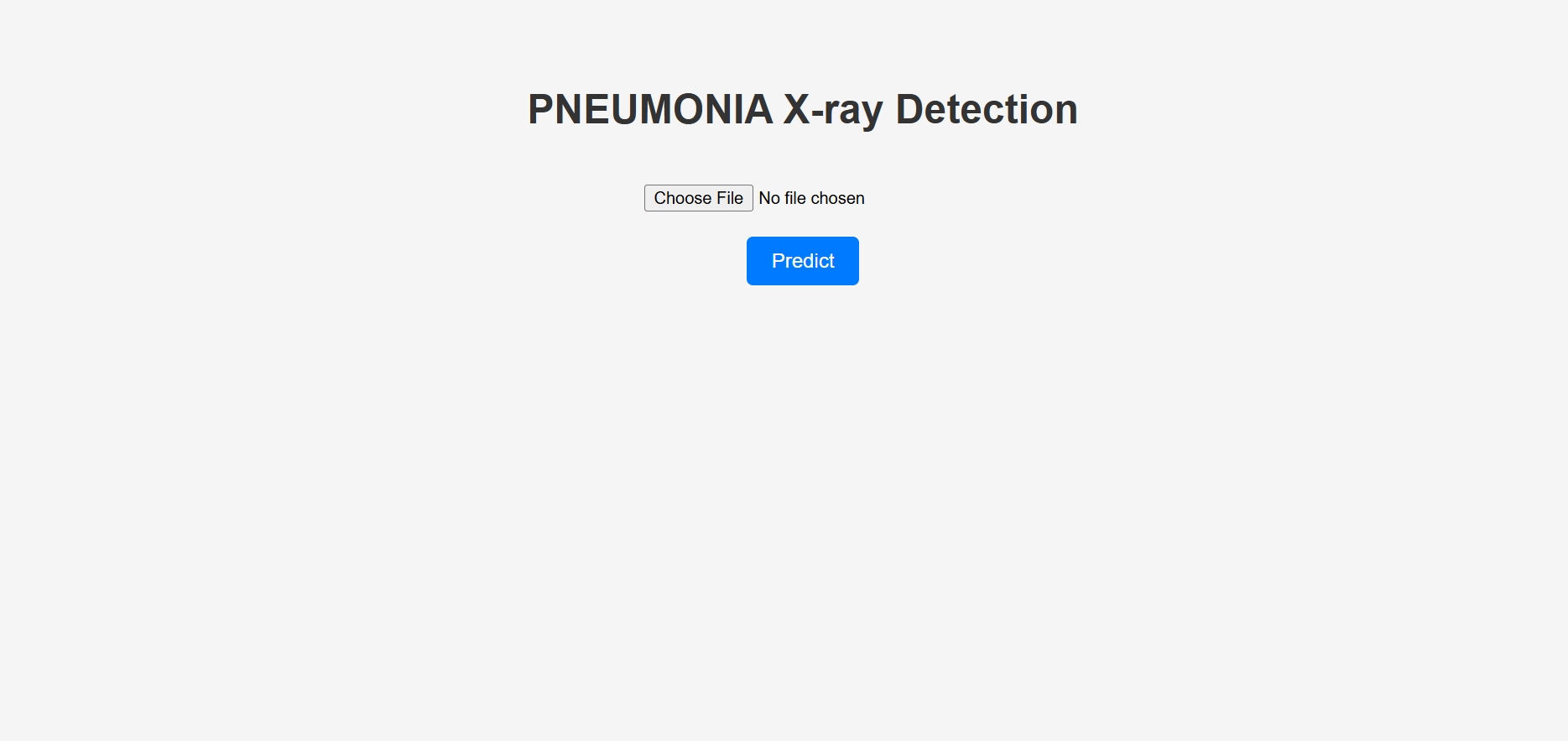
Open static/index.html in your web browser. Upload an X-ray image, and the system will return a prediction: NORMAL or PNEUMONIA.

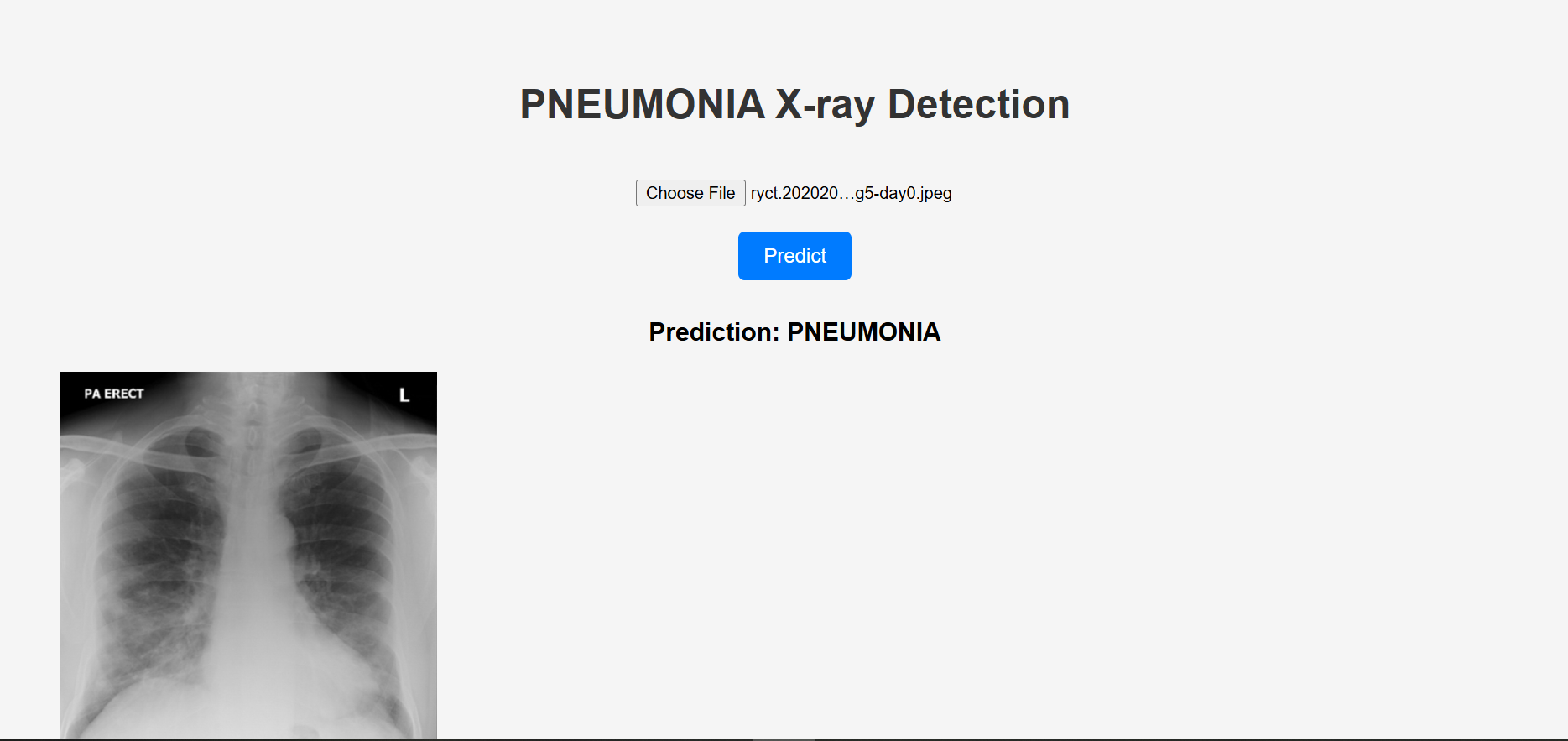
- Architecture: ResNet18
- Loss Function: CrossEntropyLoss
- Optimizer: Adam
- Input Size: 224x224 (resized)
- Number of Classes: 2 (NORMAL, PNEUMONIA)
The model achieved a test accuracy of 100% on the provided test dataset. Real-world performance may vary depending on image quality and dataset variability. Further validation on diverse datasets is recommended before clinical use.
This project is open source and may be used for educational and research purposes. It is not intended for medical diagnostics without proper validation and regulatory approval.