Agentic applications you own.
Agent-native is an open source framework for building apps where an AI agent, a full application UI, and a computer work together as one. Fork a template, launch in minutes, and let AI help you customize it to your exact needs.
Other products charge you for rigid software you can't change. Agent-native gives you the code — you own it, you customize it, you evolve it with AI.
Start from a production-ready template. Each one replaces tools you're paying for — except you own everything and can customize it however you want.
|
AI-Native Mail, Superhuman Superhuman-style email client with keyboard shortcuts, AI triage, and a fully customizable inbox you own. |
Calendar AI-Native Google Calendar, Calendly Manage events, sync with Google Calendar, and share a public booking page with AI scheduling. |
Content AI-Native Notion, Google Docs Write and organize content with an agent that knows your brand and publishing workflow. |
|
Slides AI-Native Google Slides, Pitch Generate and edit React-based presentations via prompt or point-and-click. |
Video AI-Native video editing Create and edit Remotion video compositions with agent assistance. |
Analytics AI-Native Amplitude, Mixpanel Connect any data source, prompt for any chart. Build reusable dashboards, not throwaway Q&A. |
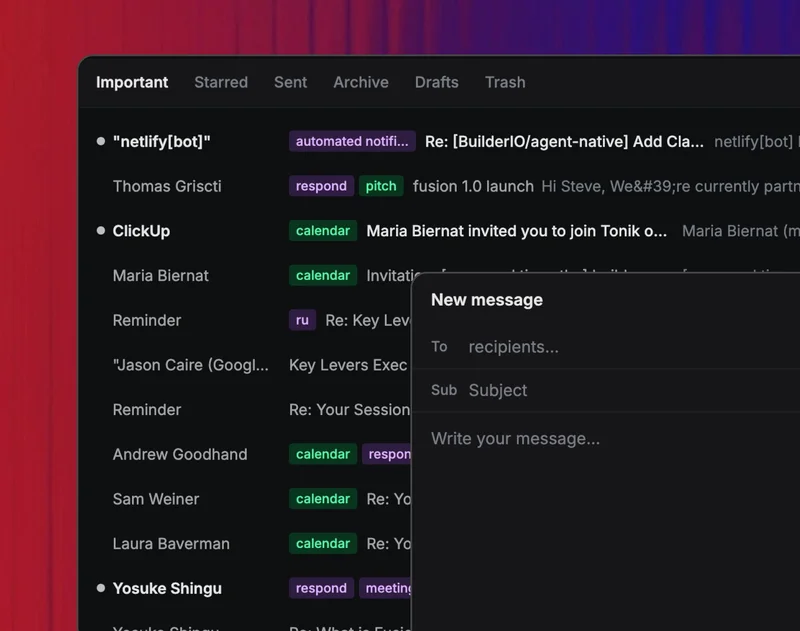
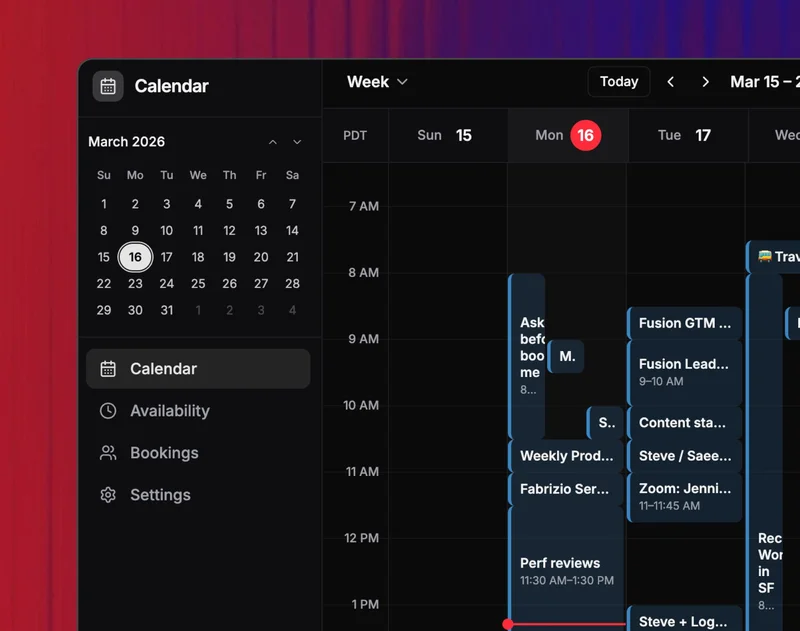
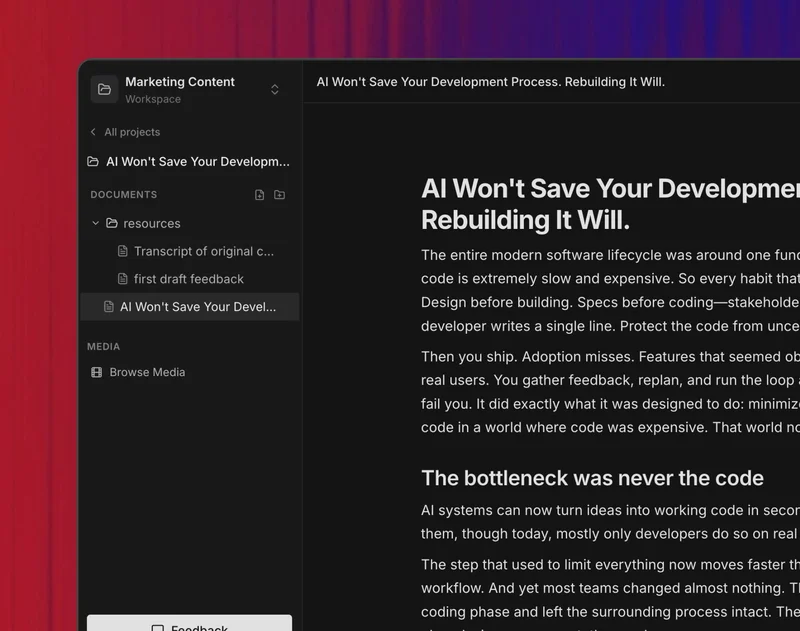
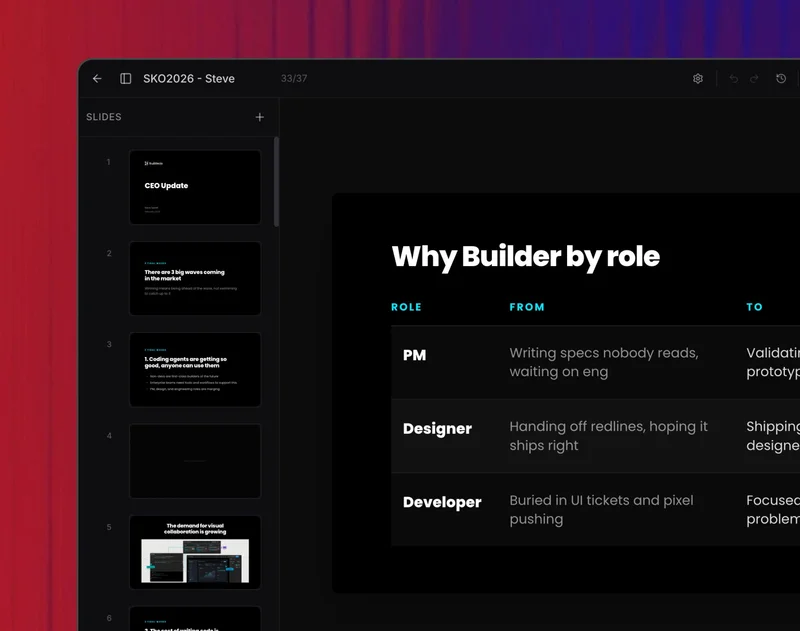
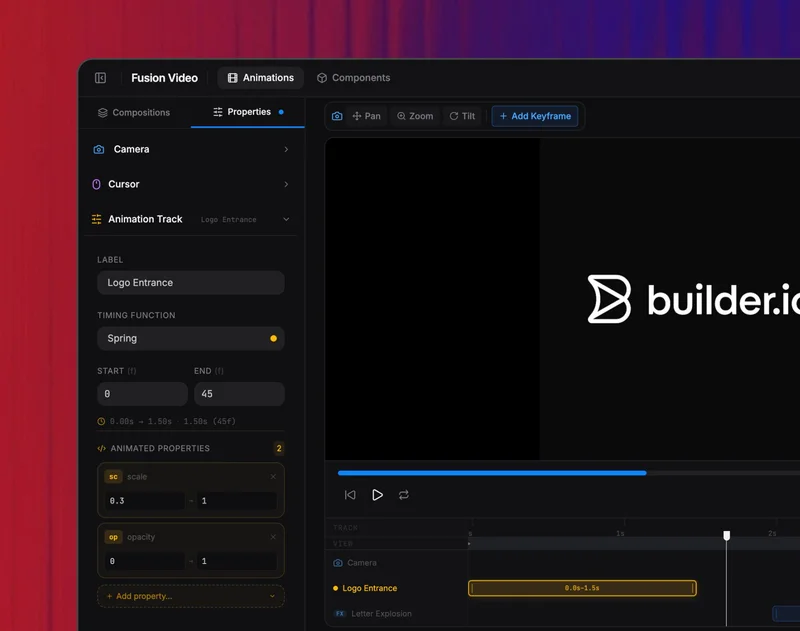
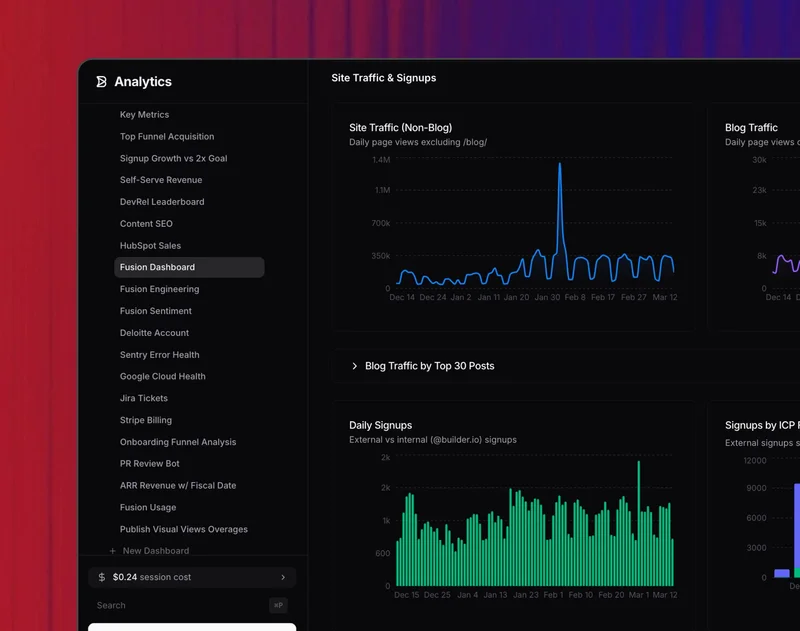
Every template is forkable, open source, and designed to be customized. Try them with example data before connecting your own sources.
npx @agent-native/core create my-app
cd my-app
pnpm install
pnpm dev
Or launch a template — no setup required.
Agent-native apps follow five rules:
- Files as database — All state lives in files. The agent and UI share the same source of truth.
- AI through the agent — No inline LLM calls. The UI delegates to the agent via a chat bridge. One AI, customizable with skills and instructions.
- Agent updates code — The agent can modify the app itself. Your tools get better over time.
- Real-time sync — File watcher streams changes via SSE. Agent edits appear instantly.
- Agent + UI + Computer — The powerful trio. Everything the UI can do, the agent can do — and vice versa.
Agent-native apps run inside a harness — a host that provides the AI agent alongside your app UI.
| Local / Open Source | Builder Cloud | |
|---|---|---|
| Run | Claude Code CLI or any local harness | One-click launch from templates |
| Collaboration | Solo | Real-time multiplayer |
| Features | Full permissions, full control | Visual editing, roles & permissions |
| Best for | Solo dev, local testing, OSS | Teams, production |
Your app code is identical regardless of harness. Start local, go to cloud when you need teams.
Agent-native ships with built-in skills — structured guidance files in .agents/skills/ that teach the AI agent how to work within the framework. Every new app created with npx @agent-native/core create includes them automatically.
| Skill | Purpose |
|---|---|
files-as-database |
Store and read all state as files |
delegate-to-agent |
Route AI work through the agent chat |
scripts |
Create and run agent-callable scripts |
sse-file-watcher |
Keep the UI in sync via SSE |
self-modifying-code |
Safely edit app source and components |
create-skill |
Add new skills to the agent |
capture-learnings |
Record corrections and patterns |
frontend-design |
Build distinctive, production-grade UI |
The frontend-design skill (sourced from Anthropic's skills library) is active across all templates and new apps. It guides the agent to produce visually striking, memorable interfaces — committing to a clear aesthetic direction rather than defaulting to generic AI-generated patterns.
Key principles it enforces:
- Typography: Distinctive, characterful font pairings — never Arial, Inter, or system defaults
- Color: Cohesive palettes with dominant colors and sharp accents
- Motion: High-impact animations and micro-interactions via CSS or Framer Motion
- Spatial composition: Asymmetry, overlap, and unexpected layouts over predictable grids
- Backgrounds: Gradient meshes, noise textures, and layered effects over flat solid colors
Full documentation at agent-native.com.
MIT