Releases: Phovos/Morphologic
initialRelease

v0.0.20
v0.0.13 'initialRelease' is dead, there's no-point in crystalizing practices which aren't coherent to the reflexive product. v0.0.20 is now the presumptive and truest 'initial release', all the foibles of semantic versioning and contemporary CICD withstanding.
This is the initial release of "MSC", establishing the foundation for a persistent identity framework. This release focuses on setting up essential documentation, licensing, and compliance materials to ensure a robust starting point for future development.
This is the presumed and only release until the next is published. Only 'releases' (like this one) are fit to distribute, for various not necessarily important reasons; this is as opposed to 'branches' or 'builds', etc. [of MSC: Morphological Source Code]. Please feel free to follow-along in the development repository, even clone/fork/etc., but keep in-mind that Phovos (author) explicitly has a 'release'-structured delivery pipeline for continuous integration and iterative semantic-versioned development.
This project follows Semantic Versioning (SemVer) for releases.
Only tagged releases (like this one) are considered stable for distribution. Development branches may contain experimental potentially harmful changes.
Expect periods of development activity between releases as I refine the project.
source: #1
Requirements:
- Idempotent
- (Self-aware)Semantic versioned
- Best practices
- CICD (limited)
Features:
- No ByteWords, yet
- Server
- Module, function, first class 'object' PyObj
- Functional + Compositional primitives (map, cat)
- 'conjugation'(syntax)-helper for necessary Reverse Polish Notation of cognitive lambda calculus
v0.0.20 changes (v0.0.13 parent)
OpenAI up and released a 20b, and now that USA has finally joined the race; I will proceed with a much more extensive implementation of Morphological Source Code now that there is a reason, a call, to produce a real benchmark, a real cognitive test, tied to thermodynamics and agentic motility in relativistic spacetime.
https://huggingface.co/openai/gpt-oss-20b
I will use latest Llama + gpt-oss for the US contenders and Qwen + Deepseek for China: local-only, sandboxed-only, scientific + principled and controlled for human bias (only one: no organization no profit motive, as-pure as is presently obtainable [in this the period of the 21st century where such things as "fiduciary responsibility" exist, but no actual codified bill of rights or human-centrist jurisprudence or international rules based order (see: the very East/West bifurcation that OAI has finally put-up the 'Western' challenger-for) {yes, btw, ai is going to be highly involved in jurisprudence in the future, don't blame me blame the poor jurisprudence up until now}, or, for that matter, any means of attaining consensus on thermodynamic matters which would traditionally be construed as the purview of 'geopolitics' of 'nationstates' with 'sovereignty'.].
All "Morphological Cognitive Testing" includes not-only a thermodynamic spectra, but also is fully semantically versioned and 'quine-safe' such that any-given release is ready for a "Will-safe" or Schopenhauerian quasi-infinite field-theoretic multi-instantiation [which is probably just my adjective deleted way of saying: 'Has good CICD, hygiene, etc. best practices for any-given contemporary 'business logic' circuit/script'.]
This is a pivotal event in what has been almost 3 years of research and work, and, frankly, anticipation and angst [since gpt3 'beat' the Turing test]. Here is the most potent punch you can get, if you are new and need more MSC, but can't have it since this release isn't finished:
My initial argument, submitted to the public sphere almost a year ago, now, is perhaps the best freely-obtainable treatment of these matters as they pertain to "Machine Learning" and contemporary computer science, especially if you don't speak LLVM assembly or compiler-theory, natively:
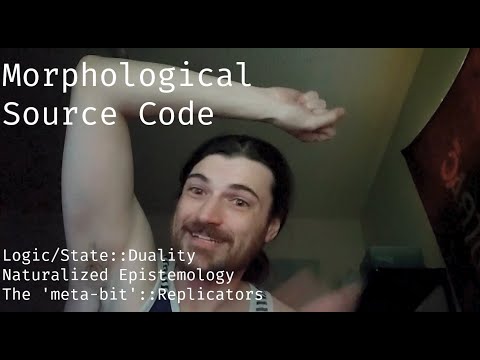
---
title: "Ontological Relativity & AI Singularity: Convening Epistemic Dualities and Morphological Source Code"
url: "https://www.youtube.com/watch?v=ecQevCn-fcI"
description: |
We need to talk more about the singularitie(s). The greats of the 20th century appear to have melted their darling wings on the sun of the pre-y2k information-age. I don't understand why the great philosophy of the past 50 years hasn't been about the digital/analogue singularity its the most important thing I can think of other than the intrinsically human singularities like time and cognition. I posit that we could have got started with the machine learning revolution 50 years ago and that we have more or less had the tools this whole time. It's not truly an engineering (consumer product/chipset), its an ontology problem - the truly dualistic data structure can reverse its own logic and give the chip blue prints straight to the fab, cutting out a few steps.

#Quine, #MorphologicalSourceCode, #Cognosis, #LLM, #Epistemology, #Philosophy, #ComputerScience, #Phenomenology, #FunctionalProgramming, #OpenAI, #Anthropic, #Strawberry, #Q*, #QStar, #Pathfinding, #Entropy, #QuantumInfoDynamics, #MetaProgramming, #MetaLanguage, #Singularity, #Ontology, #MachineLearningRevolution, #Cognition, #neuroscience, #ai, #ml, #machinelearning, #transformers, #replicatiors, #quine, #quines

0:33 wave/particle duality
3:00 free energy principle
5:00 observer observing a free energy differential field equation
6:23 P=NP reiteration, 'a field' of information
7:20 Observation collapsing the wave function of the global wave function
9:20 Cognition and extensive quantum entanglement
10:10 The 'bit' of (analogue) information
10:45 Jung and the collective unconscious
11:56 Plato and 'the cave wall' prerequisite of so-called language
12:29 Artificial truths, meta languages
12:47 <explains the arm singularity metaphor>
13:33 State/Logic duality
15:49 (double)Ontological Relativity
16:12 Blackbox Ontological Relativity
16:30 & The cognitive singularity
18:35 "Path Integral" (I'm sorry Dr. F, I will change this nomenclature)
18:58 ..is a singularity
19:16 Jungian binary?
19:45 Crystals??
20:30 Translation using meta language heuristics
21:10 'Object oriented' "Lo! It rabbiteth!"
22:28 "Path integral" -> "Quine/ModifiedQuine/Replicator"
23:10 Replicator is the 'meta-bit'
23:39 (irritating noise, sorry)
24:22 Agentic/Linguistic relativity
25:15 Double relativity ---- The agentic milieu is relative (intensive in thermodynamic char, despite burning heat to exist)?
26:00 Reiterate double relativity ----- 'Computational frame', 't=0 abstraction (implying a differential causal entanglement medium/milieu)'
28:20 Naturalized Epistemology
29:10 After much ado: "Morphological Source Code"
29:40 Informational 'meta-bit' reiteration (replicator)
30:21 Signal Processing compare and contrast
31:08 Continuous Variable Decomposition (Fourier Transform)
32:00 Reiterate what "Path integration [Quine/ModQuine/Replicator - versus Von Neumann-Turing conventional computational causal program planning (the 'morphological' aspect)]" is
32:24 Reversibility/self-reference singularity (meta CICD, 'crystal' [directed acyclic graph] structure)
33:00 'Work' & thermodynamics of information, language, or state/logic dualities
34:15 Morphology of the informatics singularity: "Path integration"
35:15 Functional programming meta paradigm of state/logic duality - modeled as a differential equation or evolutionary system
36:45 The phenomenology of double relativity observer(less) singularities
38:25 Harmonic time-abstracted / differential equations (signal processing analogy in reverse) '
38:55 replicators and cognitive systems speculative architecture
40:28 Quine/Replicator architecture
41:22 Replicatory holography
42:11 Possible causal 'triparte' - the code we had (git), the code we have(runtime), and the code we want (conclusion of and then reinstating of)
42:40 Replicator speculative thermodynamics of dynamical situations
44:00 reiterate/state quasi hypothesis about 'intensive' character of the computational moment abstracted as a differential equation
45:30 'live' programming example - I promise I'm a better coder when the camera isn't on
The story so-far:
#!/bin/bash
FILE=$1

echo "Initializing Python bridge..."

if [ -f "./scripts/appBridge.py" ] && [ -f "pyproject.toml" ]; then
  VERSION=$(python3 ./scripts/appBridge.py)
  echo "Detected version: $VERSION"
else
  echo "[WARN] pyproject.toml or appBridge.py not found. Skipping version extraction."
fi

echo "[PYTHON] Sending version $version to Python"

# Assuming the version is sent as a JSON object
echo "{\"version\": \"$version\"}" | python3 -u main.py
import tomllib
import sys
import os
# there is one source of truth; the pyproject.toml, so we use a python script @ build.
msc = {}
def extract_version(file_path):
try:
with open(file_path, "rb") as f:
pyproject = tomllib.load(f)
version = pyproject["project"]["version"]
msc = pyproject.get("tool", {}).get("msc", {})
print(f"Additional MSC configs: {msc}")
print(version)
except FileNotFoundError:
print(
f"[WARN] {file_path} not found. Skipping version extraction.",
file=sys.stderr,
)
sys.exit(0)
except KeyError as e:
print(f"[WARN] Missing key in {file_path}: {e}", file=sys.stderr)
sys.exit(0)
if __name__ == "__main__":
if ...