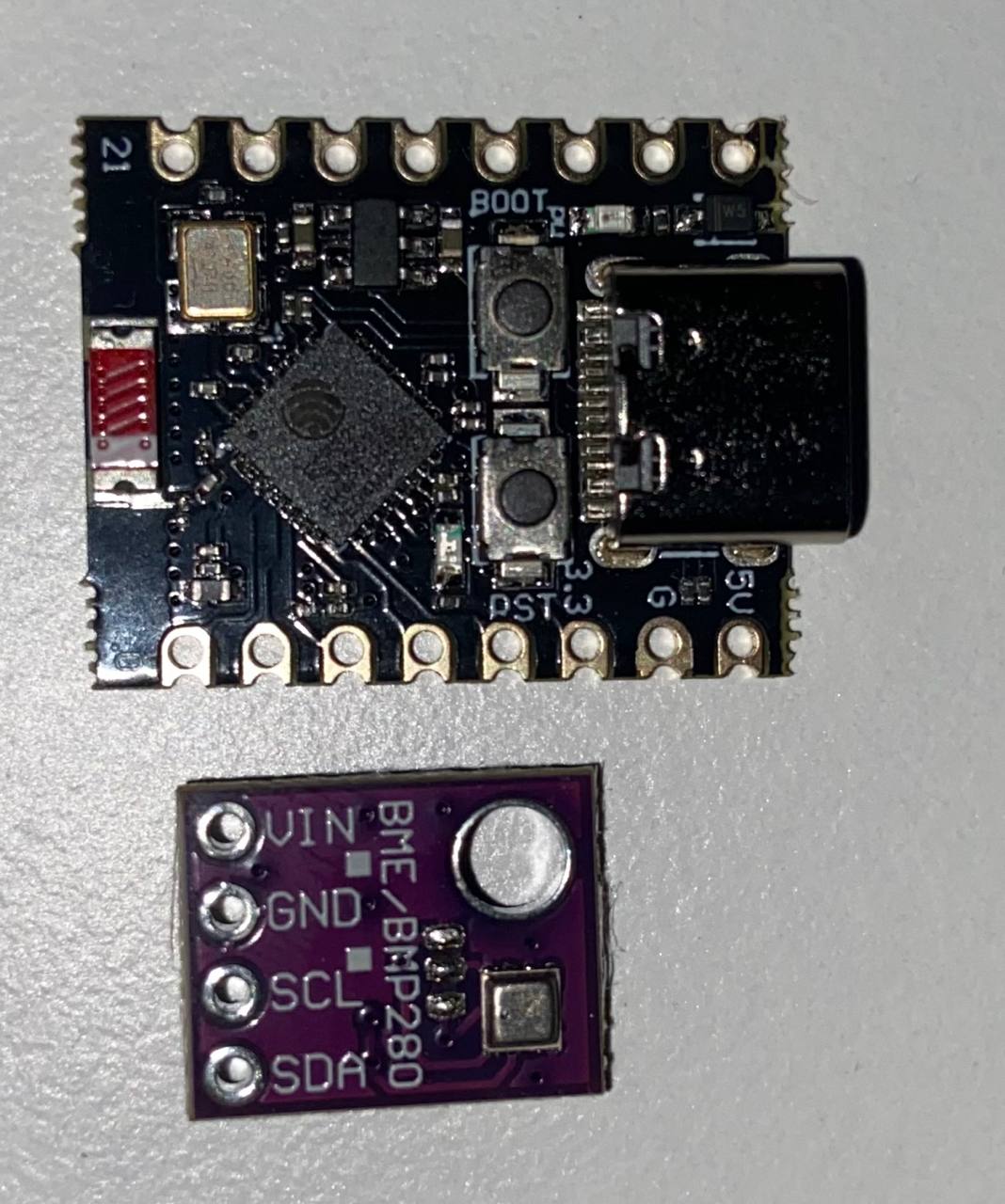
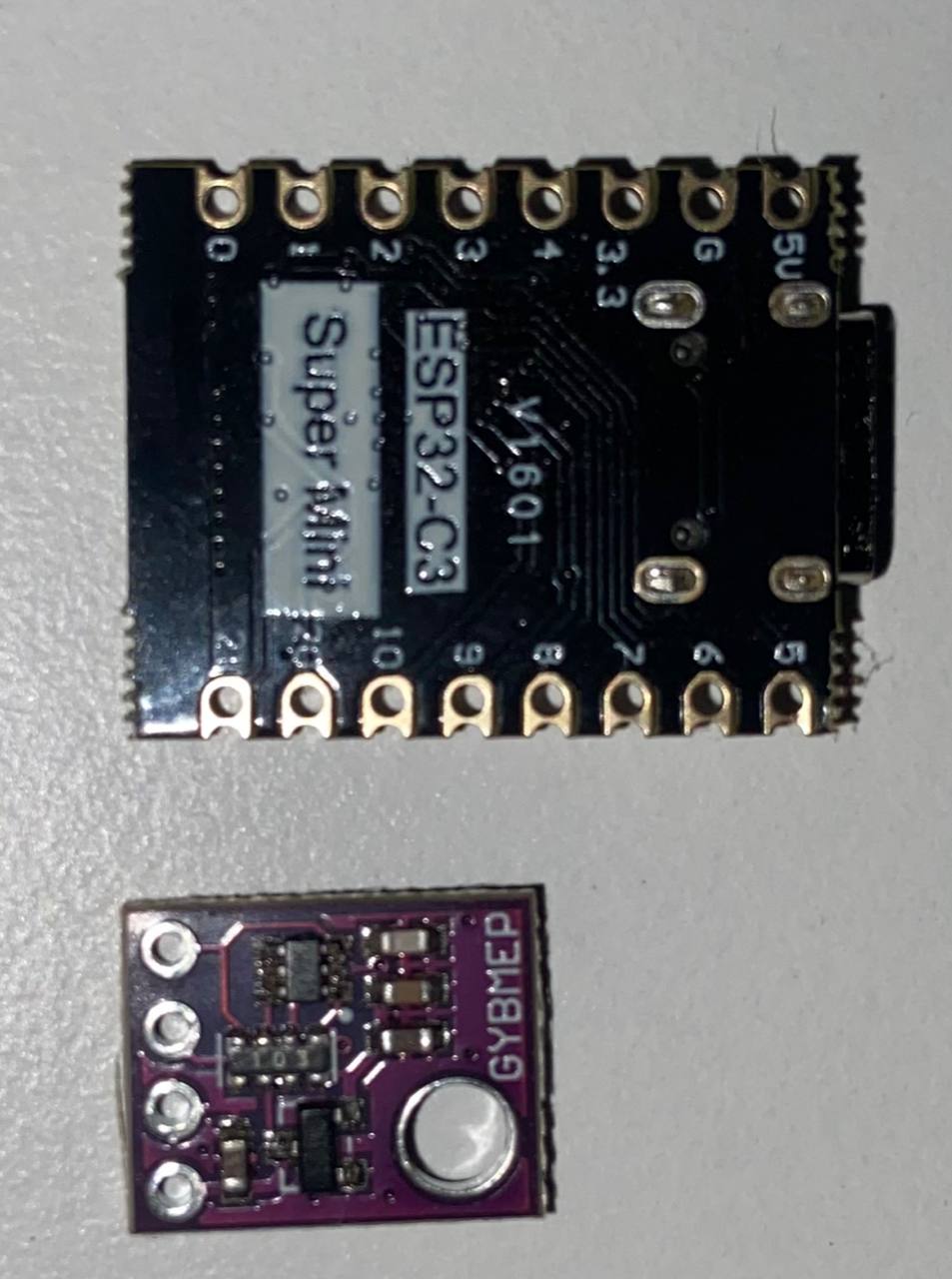
A lightweight IoT firmware for ESP32-C3 SuperMini that reads environmental data from a BME280 sensor and periodically sends measurements as JSON to a remote HTTP endpoint.
This project is designed for simple environmental monitoring scenarios such as balcony/weather nodes, indoor climate tracking, or distributed sensor systems.
- Temperature, humidity, and pressure measurement
- I²C BME280 sensor integration
- Wi-Fi auto connection with timeout protection
- HTTP JSON telemetry upload
- Retry logic for failed transmissions
- Sensor error detection
- Lightweight and stable runtime behavior
- PlatformIO build system
- ESP32-C3 SuperMini
- BME280 environmental sensor (I²C module)
| BME280 | ESP32-C3 |
|---|---|
| VIN | 5V |
| GND | GND |
| SDA | GPIO 8 |
| SCL | GPIO 9 |
Most BME280 modules support both 3.3V and 5V input, but 3.3V is safest for ESP32 logic.
- VS Code
- PlatformIO extension
- ESP32 USB drivers
git clone https://github.com/pvdiulin/ESP32-C3_BME280_HTTP_Sensor_Node.git
cd thmetrixEdit or create the file:
src/config.h
Example configuration:
#pragma once

#define WIFI_SSID "your_wifi_name"
#define WIFI_PASSWORD "your_wifi_password"

#define API_ENDPOINT "http://your-server/api/sensor"

#define LOCATION "location"

#define SEND_INTERVAL 30000pio runpio run -t uploadpio device monitor{
"location": "balcony",
"temperature": 23.6,
"humidity": 44.8,
"pressure": 1012.9
}- Check wiring
- Confirm I²C address (0x76 or 0x77)
- Use 3.3V power
- Verify SDA/SCL pins
- Confirm credentials
- Check signal strength
- Watch serial logs
- Verify API endpoint
- Ensure server is reachable
- Check firewall/network rules
- MQTT telemetry publishing
- Deep sleep battery operation
- OTA firmware updates
- Web dashboard integration
- Home Assistant support
- Data buffering and batching
MIT License — free to use, modify, and distribute.
- ESP32 Arduino framework
- Adafruit BME280 library
- ArduinoJson
- PlatformIO ecosystem