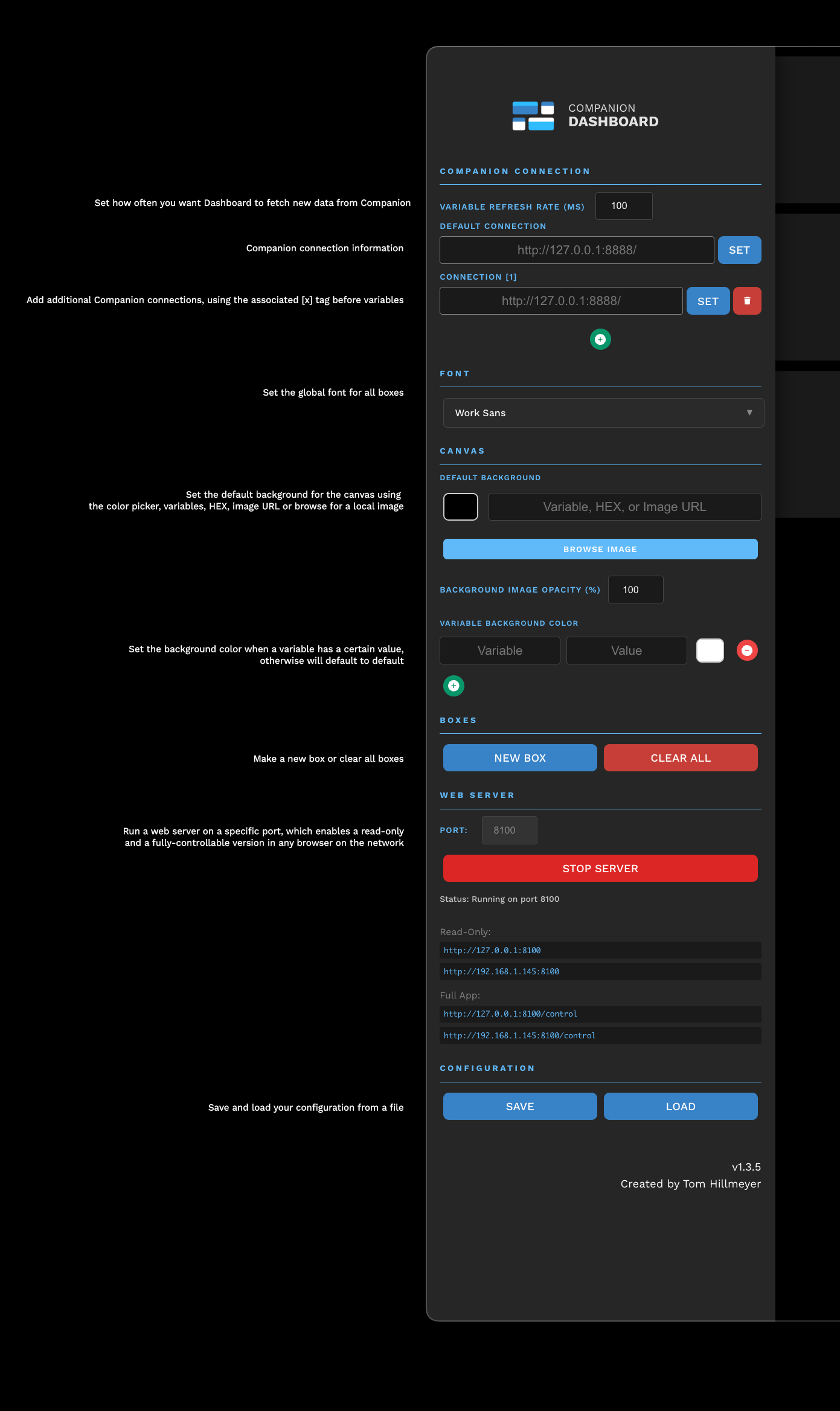
This is an application for displaying variables from Bitfocus Companion. A companion for Companion, if you will.
It is a display of boxes you can resize and move. Each of those boxes has an option for a header field, left field, and right field. Any or all of those fields can be hidden, and all consist of text fields that can display Companion variable values, markdown, HTML, or plain text.
App documentation can be found here!
Download the latest releases here for Mac (ARM), Mac (Intel), Linux (amd64), Linux (arm64) and Windows (x64).
Install a Debian Linux installation such as Raspberry Pi OS, Ubuntu Server, or Companion Pi. After installation, running this script will install the latest release of the app from GitHub, or update an already existing installation. Supports ARM (Raspberry Pi, etc.) and Intel (Intel NUC, etc.).
Dashboard will launch full screen upon boot. It is the full version of the app, but also auto-starts the web server for remote configuration.
Run this script to install, either directly on the device or over SSH:
curl -fsSL https://raw.githubusercontent.com/tomhillmeyer/companion-dashboard/main/install.sh | bash
Requires a reboot after installation:
sudo reboot
There is a TestFlight beta test for iPad. To be added to the beta, contact me at tom@tomhillmeyer.com.
 |
|---|
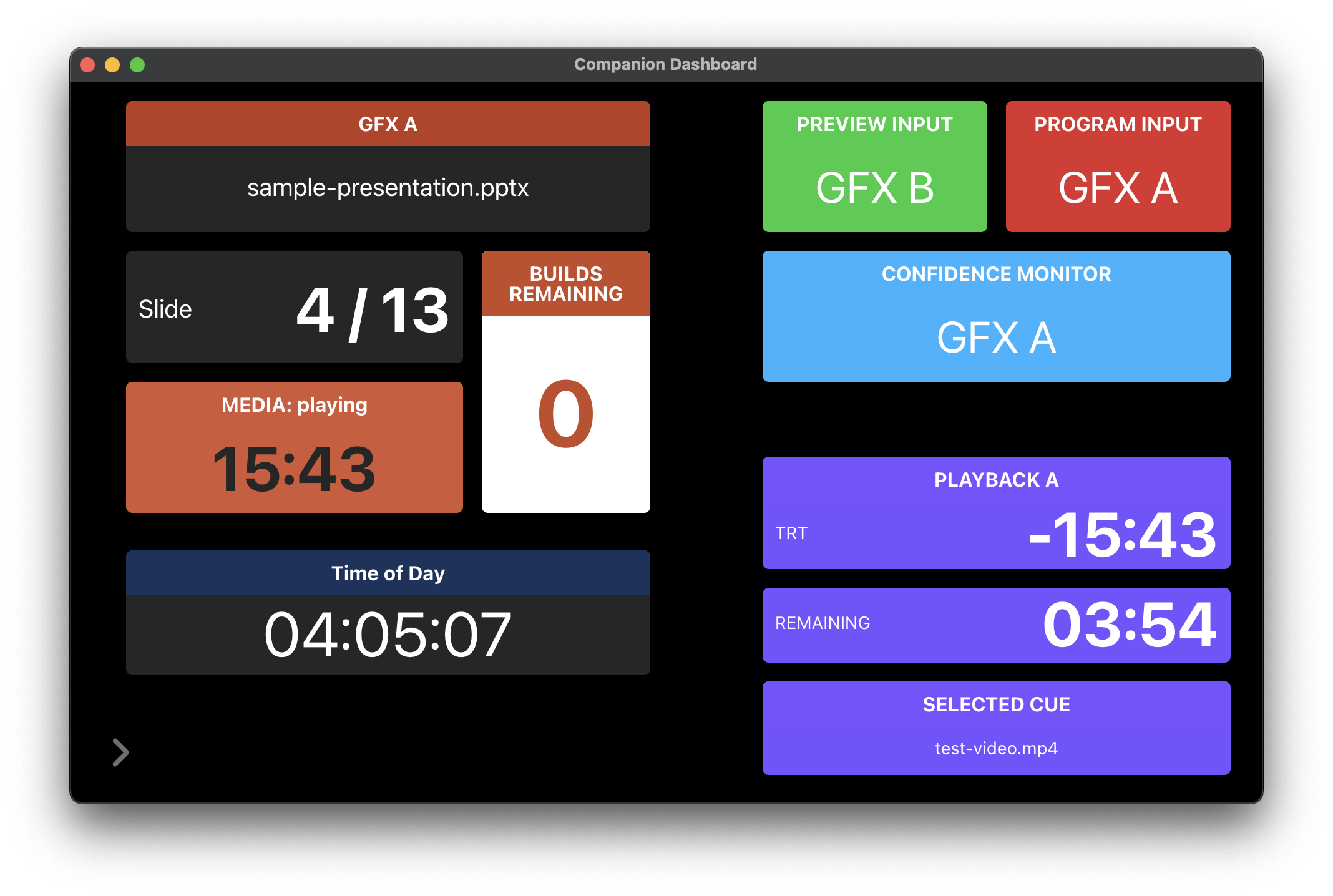
| The original inspiration, displaying variables for a live event environment with PowerPoint, video playback, and switching. |
 |
|---|
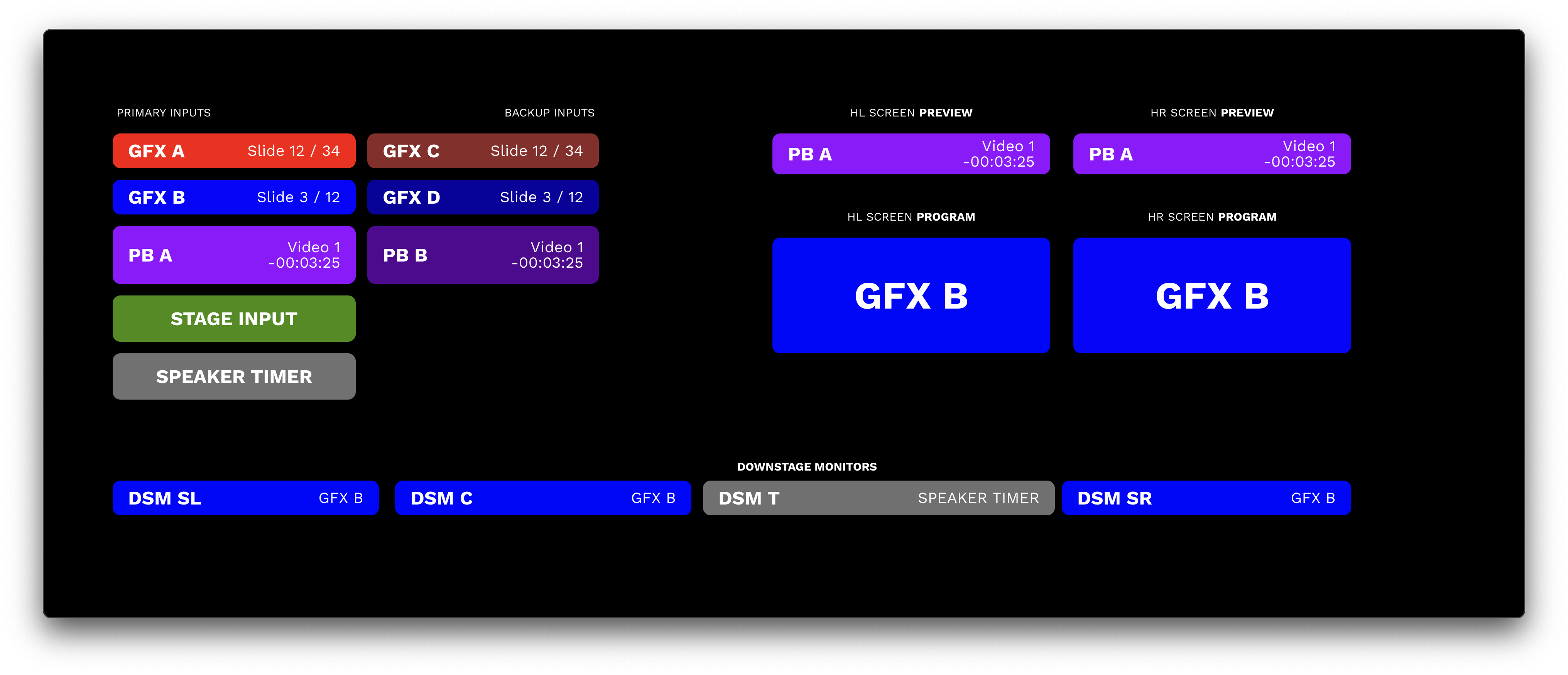
| An example of how a video switcher can use it to keep track of inputs and outputs. |
 |
|---|
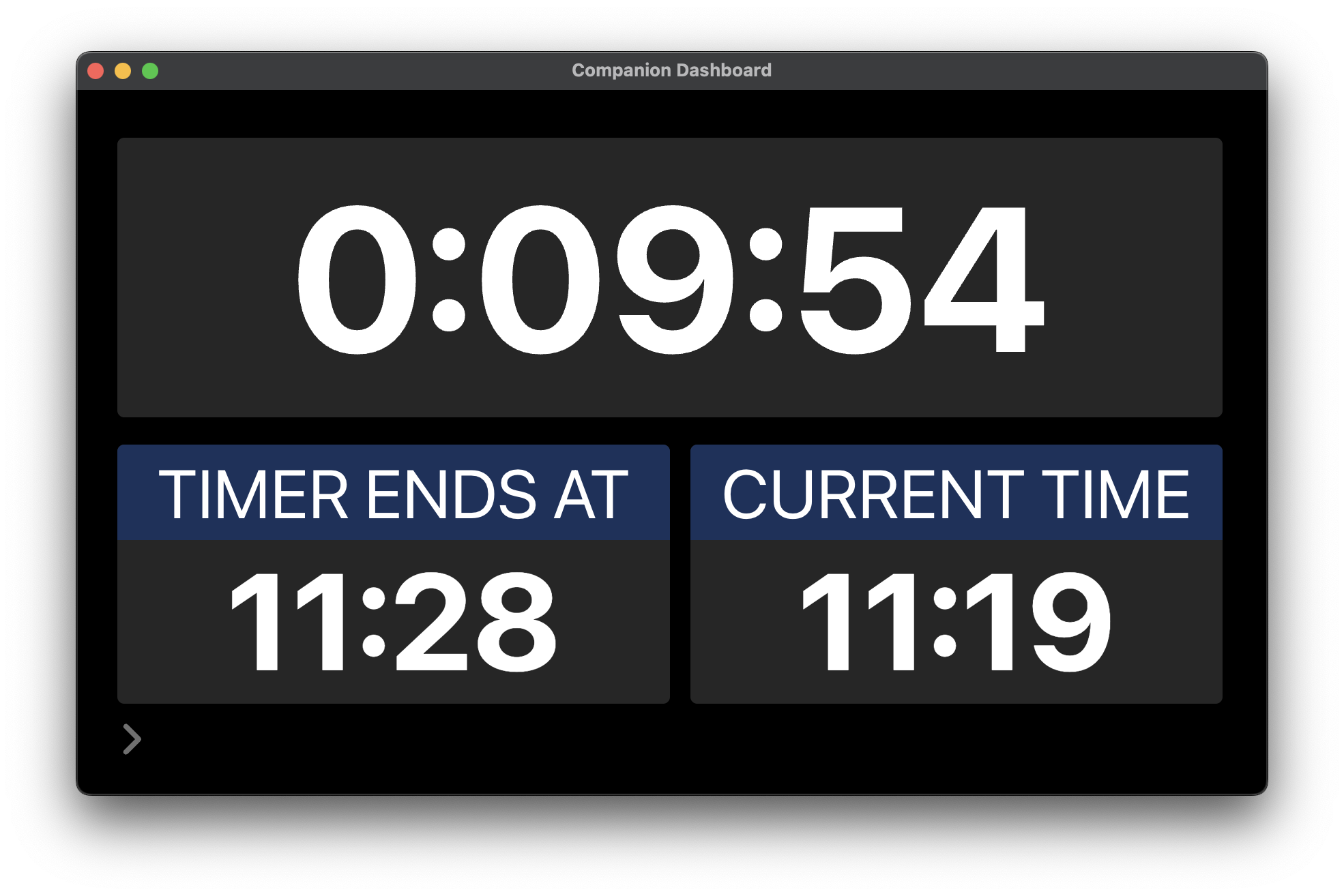
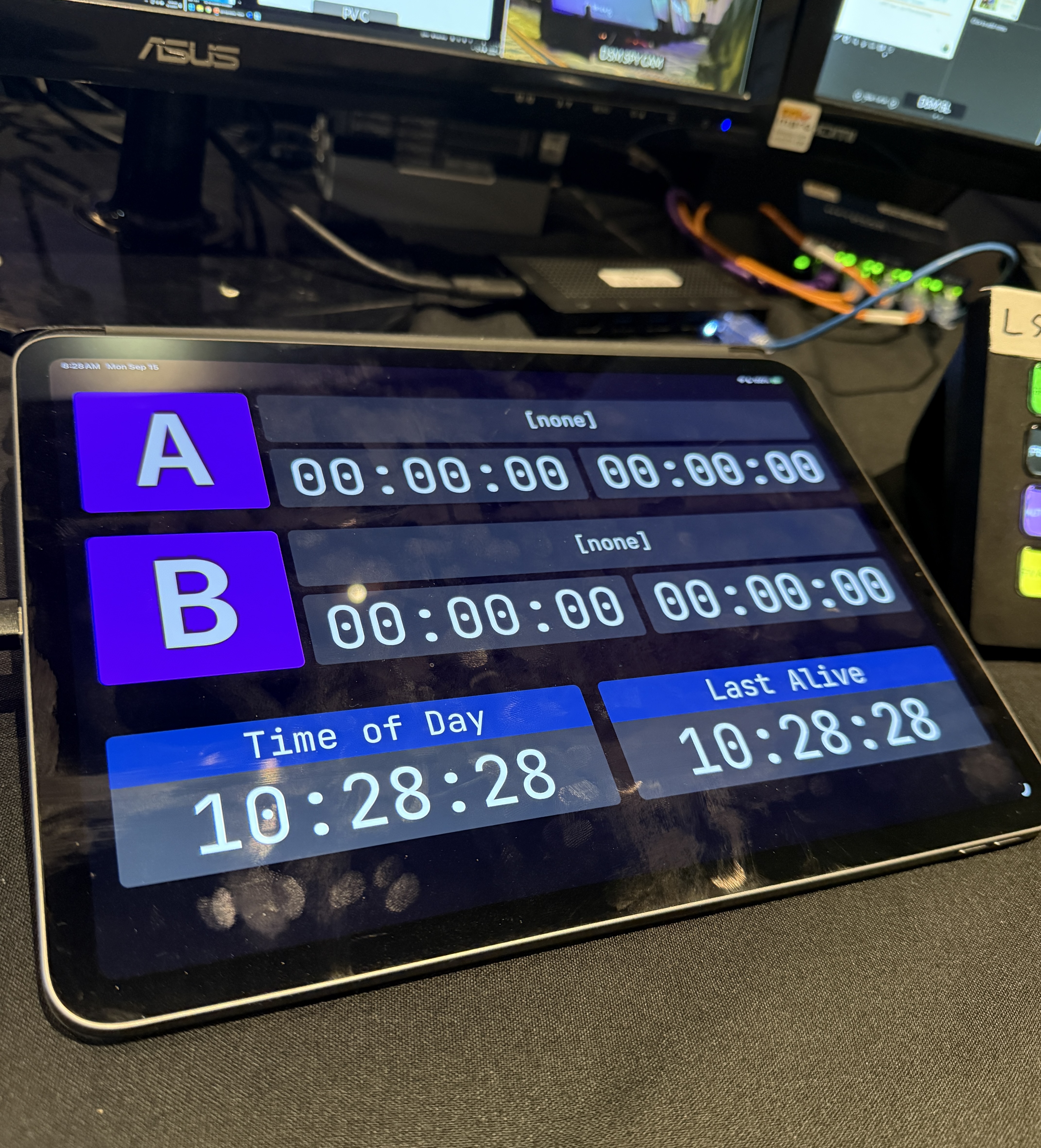
| Use Companion Dashboard to create a custom speaker timer. |
| Check out this demo here. |
 |
|---|
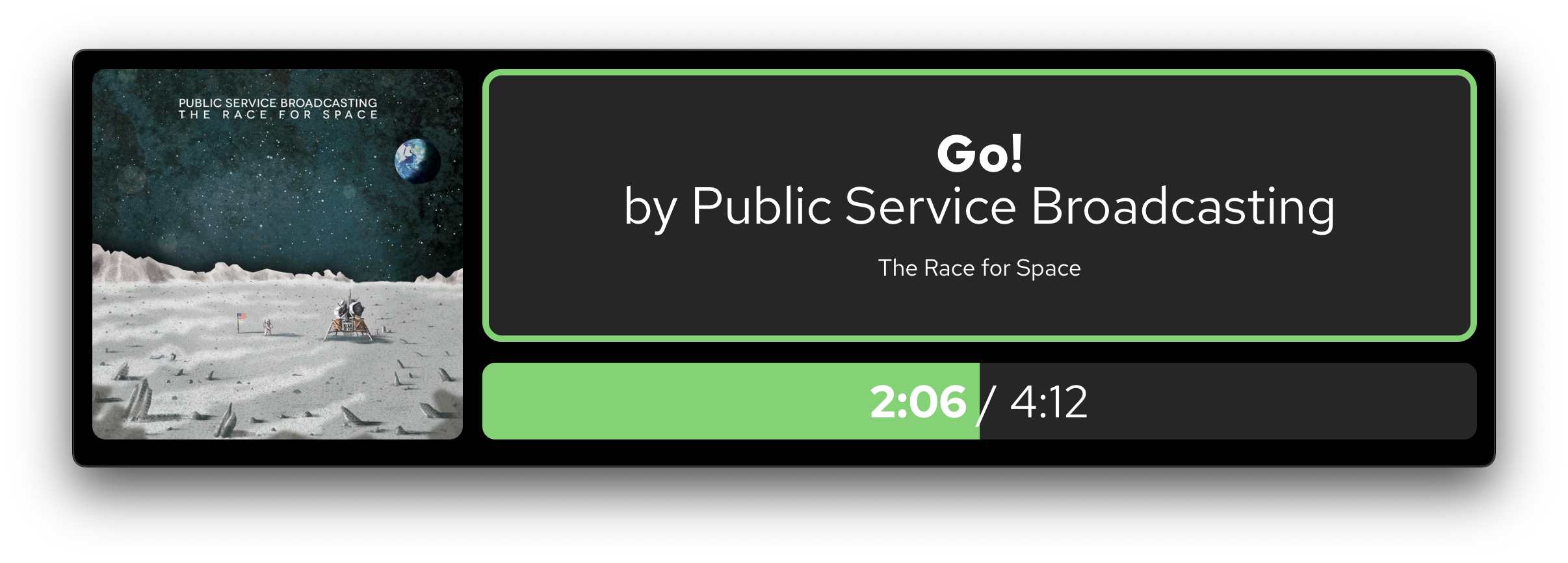
| You can display information from apps like Spotify, complete with album art. You can even use expression variables and background overlays to make a Spotify progress bar. |
| See how this layout goes together here. |
| See how to set up a media progress bar here. |
 |
|---|
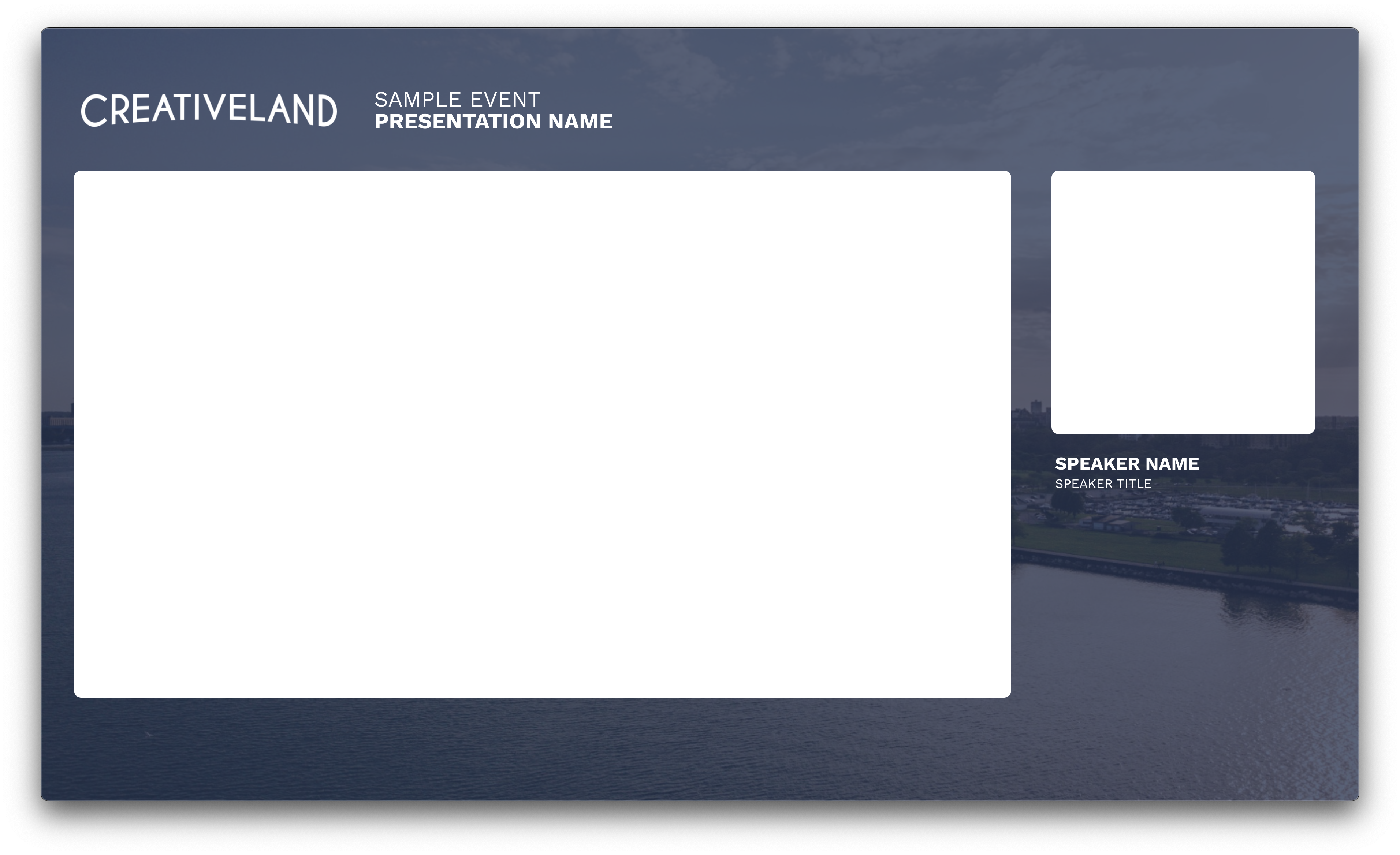
| An out-of-the-box example of how flexible this application can be. This creates a background for a two-box look with dynamic fields for presentation and speaker names. |
| See how this layout goes together here. |
 |
|---|
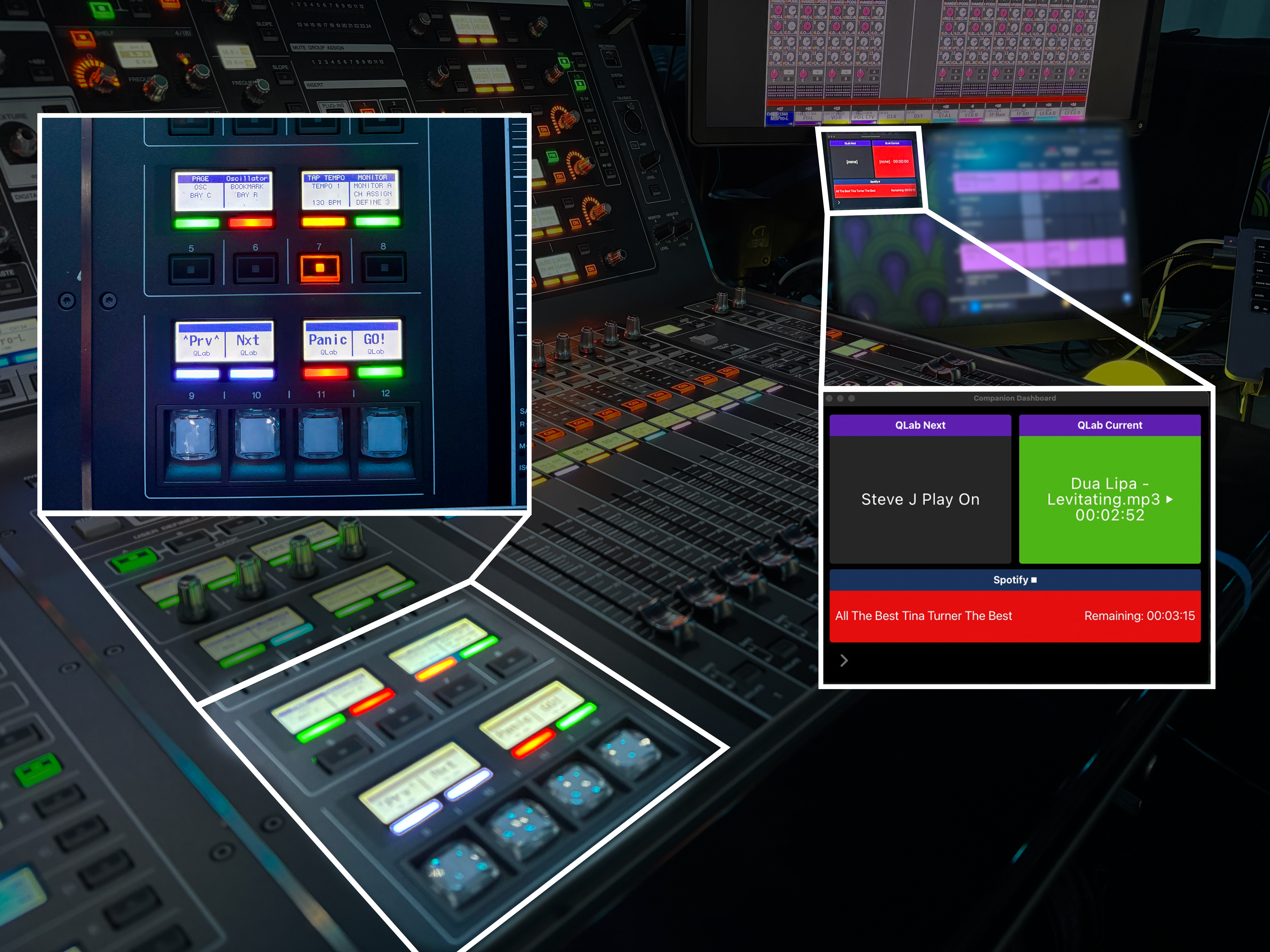
| Yamaha Audio Consoles |
| Use control keys and MIDI to control Companion directly from the console, and use Dashboard to monitor variables and feedback colors. |
 |
|---|
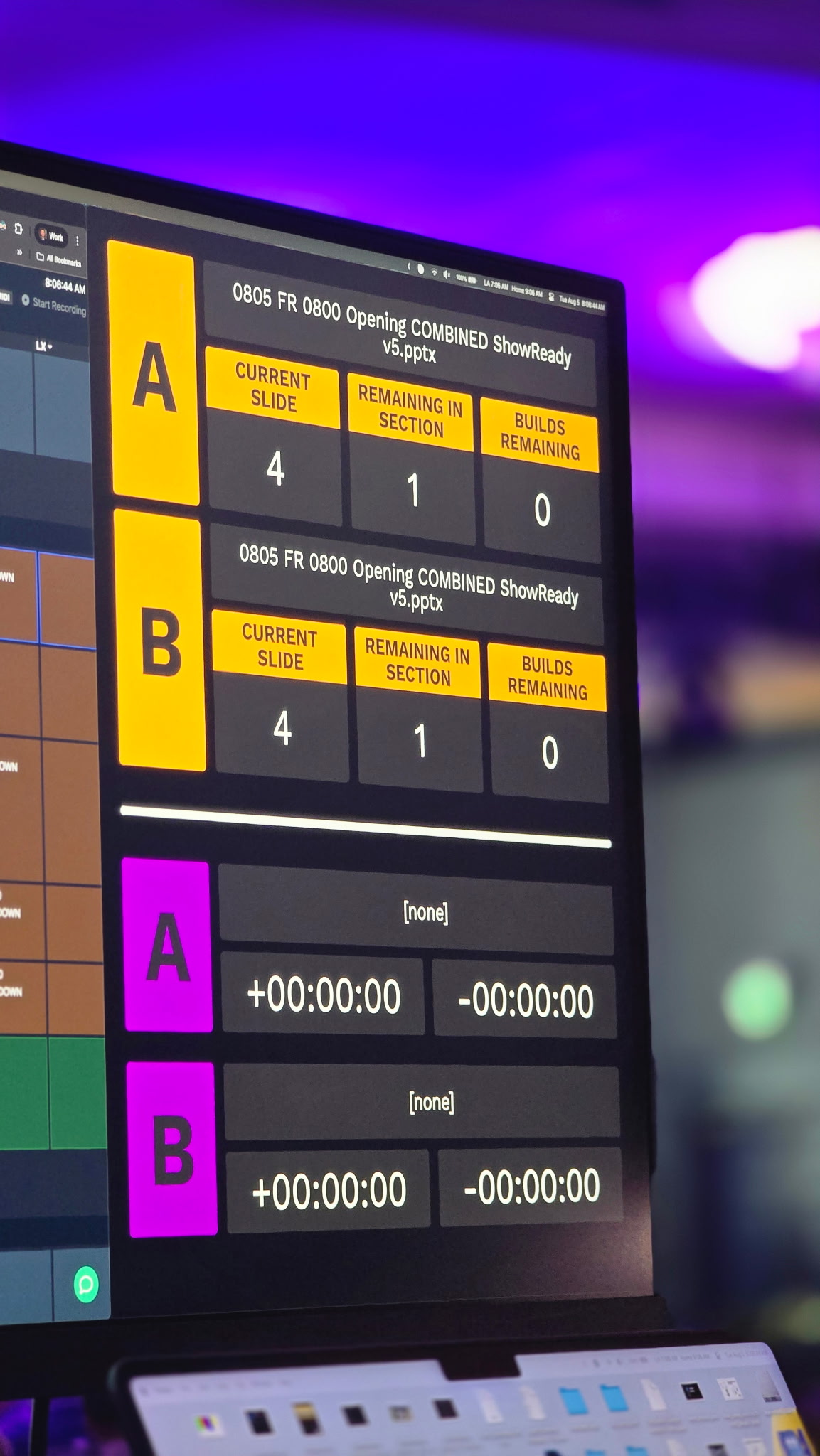
| PowerPoint |
| Use Dashboard to see more data than what PowerPoint itself shows you while in presentation mode (OSCPoint being used here) |
 |
|---|
| Media Playback and Video Switcher |
| Keep tabs on both device status and playback position on the same screen. |
- The settings pane opens from the left side of the screen. Open it with the arrow / carrot in the bottom left of the viewport, or by swiping from the left on touch screen devices
- The lock/unlock button next to the arrow / carrot will lock the boxes in place and they can't be resized or moved. When the boxes are locked, they can be interacted with (using
<iframe>or<button>, etc.)
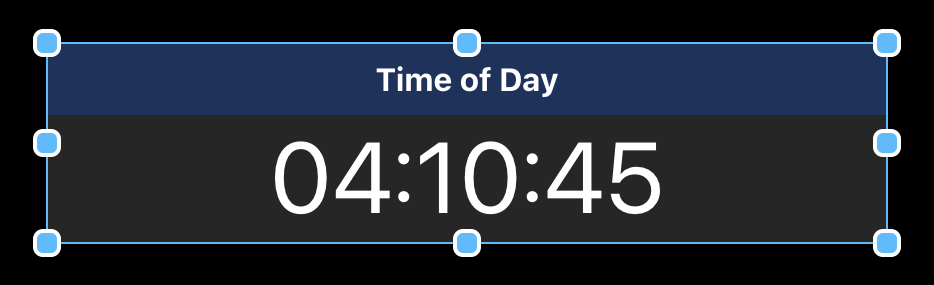
- Clicking a box once selects it and allows you to resize and move it on the canvas.
- The lock in the bottom left will toggle the ability to click boxes to resize and move them.
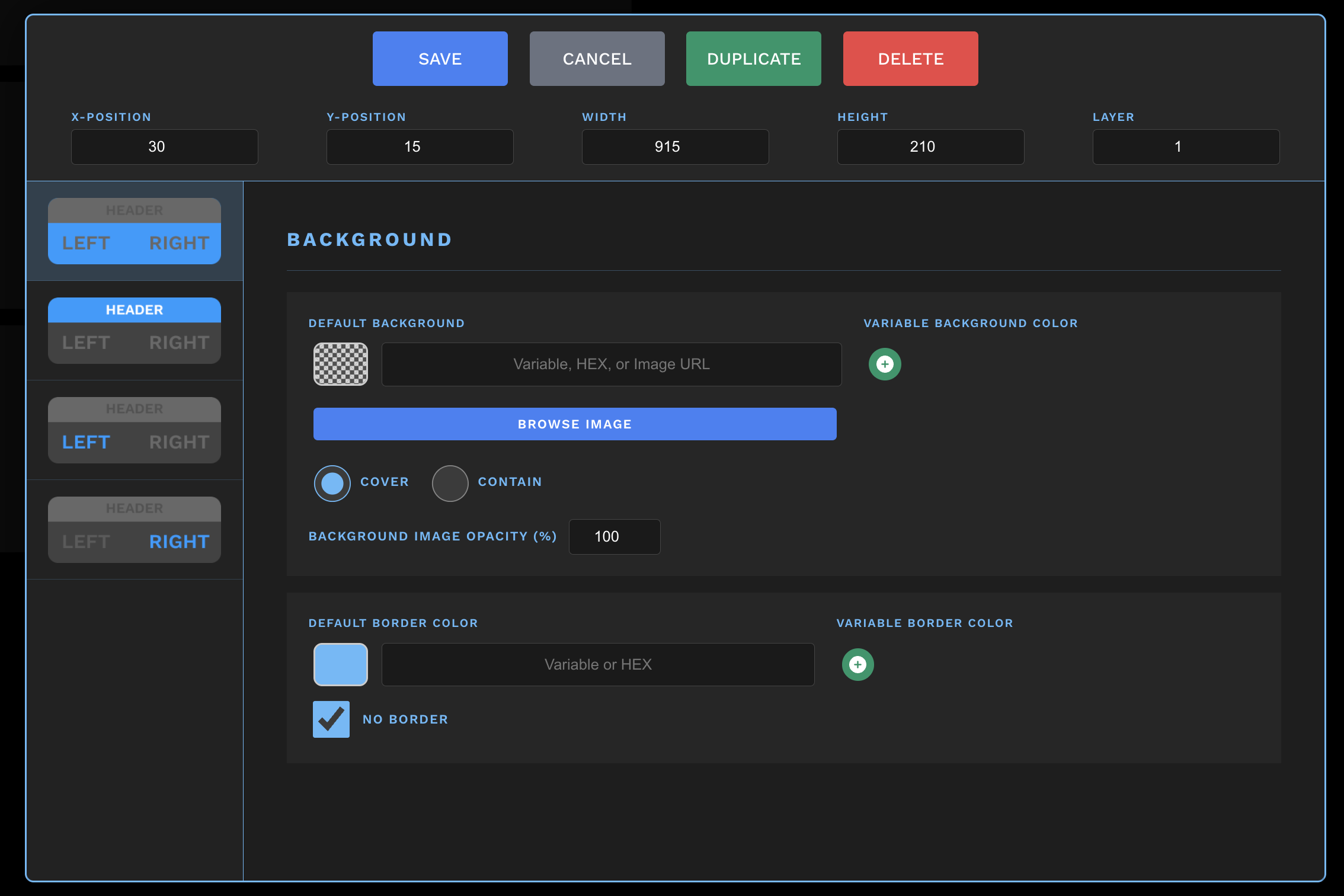
- Double clicking a box launches the settings window for that box.
- Including a variable in the standard Companion notation of
$(connection:variable)will automatically replace that variable with its value on your dashboard. - The variable by itself will use the default Companion connection. If you add
[X]immediately before the variable, it'll use that connection. For example,[1]$(connection:variable)will pull that variable from the [1] connection rather than the default connection.
All color pickers in Companion Dashboard have three options, in this order of priority:
- Variable color
- Default Variable or HEX color
- Default color picker
Clicking the green plus icon creates a new variable color. You input the Companion Variable, the value you want to look for, and then pick the color you want to apply when that variable has that value.
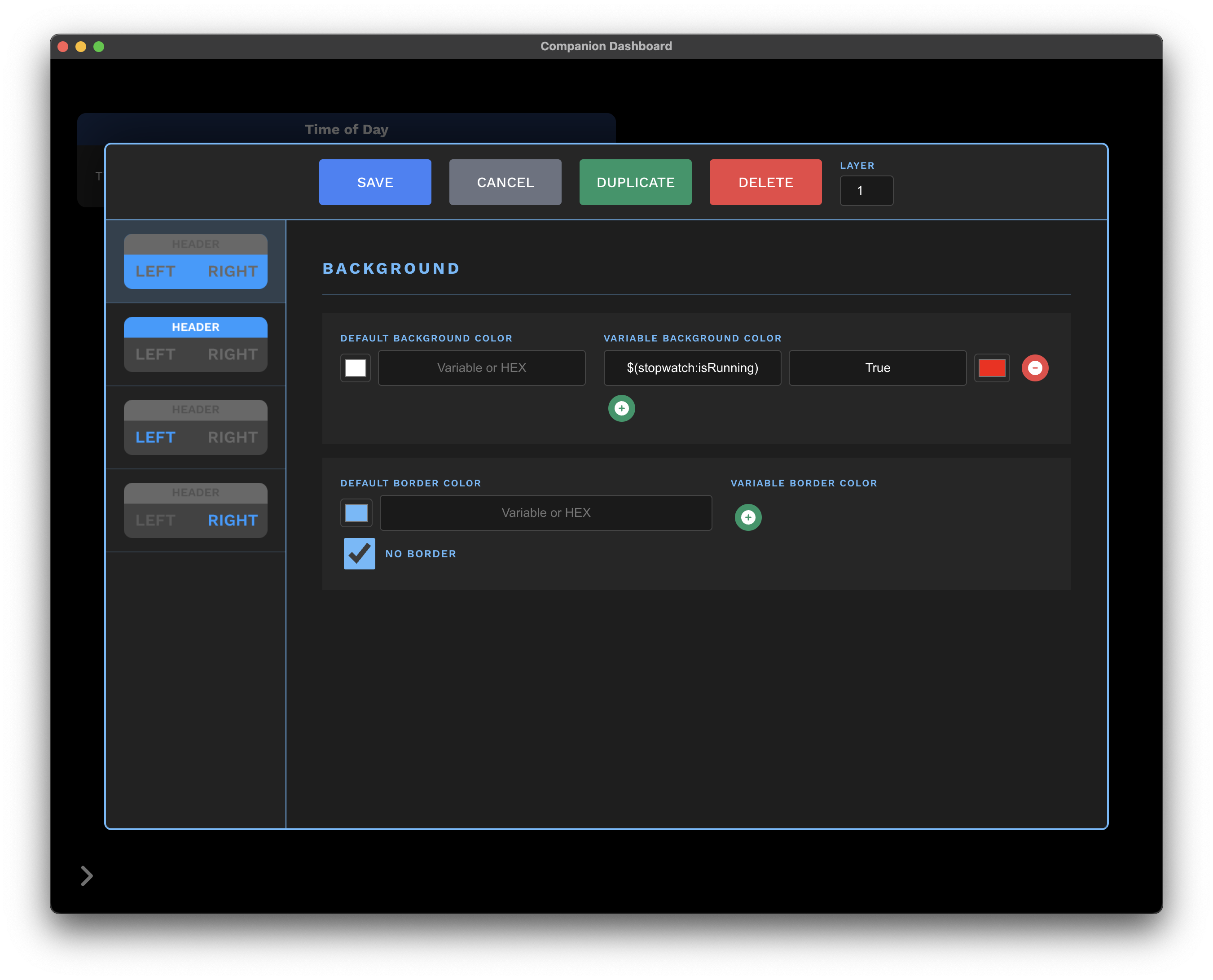
Dashboard prioritizes the variable colors from the top down. If all variable colors are false, it will check for a default variable or HEX color from that text field. If that text field is empty, it will use the default color picker value.
All text fields support HTML tags and the following markdown syntax.
- Bold
<b>Text</b>**Text**__Text__
- Italics
<i>Text</i>*Text*_Text_
- New Line
\n<br>
- Image
!(Sample Image)[https://website.com/image.png]- Image with this tag will fill the height of the box and automatically determine width
<img src="https://website.com/image.png" width="100px" height="100px" />
- Links
(Link Text)[https://website.com]
- Video / iFrame
<iframe src="https://website.com" width="100px" height="100px" />
- Text fields automatically concatenate, so you can include multiple variables and strings
- Option + click a box and it will duplicate
- Command/control + n will make a new box
- Command/control + , is a shortcut to open/close the settings menu
- Select a box and hit "backspace" or "delete" to delete
- Swipe left on touch screens to open the Settings menu
- Use
 in some circumstances where a white space isn't recognized - Under the "Window" menu bar setting is the ability to keep Dashboard always on top of your other applications
Using Expression Variables with Background Overlays
This is a dashboard application that leverages the fact that Companion translates connections into a uniform variable format. The intention is to avoid re-creating features of Companion, such as logic/triggers and third-party connections. Some logic will be included for ease of use (such as variable colors) but for the most part if it can be accomplished in Companion then it does not need to be accomplished here, at least in this iteration of Dashboard.
This project isn't directly affiliated with Bitfocus or Companion, but is obviously the backbone for this application. A huge thanks to the folks contributing to that project, especially @krocheck.
If you found this app helpful, consider buying me a coffee so I can keep making it better!