Enterprise asset management asset details such as location, department etc.
Organization Code, Department, Asset Group, Asset Number
hz_party_sites, ap_supplier_sites_all, mtl_parameters, csi_item_instances, org_access_view, mtl_system_items_vl, mtl_item_locations_kfv, eam_org_maint_defaults, bom_departments, mtl_eam_locations, mtl_categories_b_kfv, csi_i_assets, fa_additions_b, pn_locations_all, mtl_serial_numbers, mtl_object_genealogy, mtl_system_items_b_kfv, eam_failure_set_associations, eam_failure_sets, hz_locations, hr_locations_all
EAM Weekly Schedule, EAM Work Orders, INV Items
If you would like to try one of these Oracle EBS SQLs without having Blitz Report installed, note that some of the reports require functions from utility package xxen_util.
EAM Assets 28-Jul-2020 182205.xlsx
www.enginatics.com/reports/eam-assets/
Blitz Report™ import options
The EAM Assets report is the master registry for the Enterprise Asset Management module. It provides a comprehensive view of the physical assets being maintained, linking the operational view (Maintenance) with the financial view (Fixed Assets) and the logistical view (Inventory). This report is essential for:
- Asset Registry Audits: Verifying that all physical equipment is correctly registered in the system with the right attributes.
- Location Tracking: Identifying exactly where assets are located, whether in a subinventory, a specific area, or at a vendor site.
- Hierarchy Analysis: Understanding the parent-child relationships between assets (e.g., a Motor belonging to a Pump belonging to a Processing Line).
Managing a large asset fleet involves coordinating data across multiple domains.
- The "Ghost Asset" Problem: Assets might exist on the floor but not in the system, or vice versa.
- Data Disconnects: The Maintenance team knows the asset as "Pump-101", while Finance knows it as "FA-55432". Without a report linking
CSI_ITEM_INSTANCEStoFA_ADDITIONS, these two worlds remain separate. - Location Complexity: Assets move. They go to repair depots (Vendor Sites), move between buildings (HZ Locations), or sit in inventory. A simple "Location" field isn't enough; the system uses a complex polymorphic location logic.
This report flattens the complex EAM data model into a single, readable row per asset.
- Unified Identity: It displays the Asset Number (Instance Number), the Asset Group (Inventory Item), and the Fixed Asset Number side-by-side.
- Polymorphic Location Logic: It intelligently decodes the
LOCATION_TYPE_CODE.- If the asset is at a street address (
HZ_LOCATIONS), it formats the address fields. - If it's an internal HR location, it pulls from
HR_LOCATIONS_ALL. - If it's at a vendor, it resolves the Vendor Site address.
- If the asset is at a street address (
- Operational Context: It includes the "Owning Department" (who pays for the maintenance) and the "Accounting Class" (how costs are categorized), which are critical for work order generation.
The query is built around CSI_ITEM_INSTANCES (the Install Base), which is the repository for EAM assets in R12.
- Core Join:
CSI_ITEM_INSTANCES(cii) joins toMTL_SYSTEM_ITEMS_VL(msiv) to get the Asset Group definition. - Hierarchy Logic: It joins to
MTL_OBJECT_GENEALOGY(via subquery or direct join logic depending on the version) to find theParent_Asset_Number. - Fixed Asset Link: It joins to
CSI_I_ASSETSandFA_ADDITIONS_Bto bridge the gap to the Fixed Assets module. - Maintenance Defaults: It joins to
EAM_ORG_MAINT_DEFAULTSto fetch the Department and Area, which are specific EAM attributes not found on the standard item instance.
- Organization Code: The maintenance organization.
- Asset Group/Number: Specific assets to target.
- Department: Filter by the owning department (e.g., "Show me all assets owned by Facilities").
- Inline Views: The query uses an inline view for
CSI_ITEM_INSTANCESto pre-filter by organization security (ORG_ACCESS_VIEW) and resolve the polymorphicLocation_IDbefore joining to the heavy address tables. - Date Filtering: It strictly filters for active assets (
sysdate between active_start_date and active_end_date) to avoid reporting retired or scrapped equipment.
Q: Why is the "Fixed Asset Number" blank? A: Not all EAM assets are capitalized Fixed Assets (e.g., small tools). Also, the link might not have been established in the "Asset Numbers" form.
Q: What is the difference between "Asset Group" and "Asset Number"? A: The "Asset Group" is the type of asset (e.g., "Ford F-150 Truck"). The "Asset Number" is the specific instance (e.g., "Truck #44, License Plate XYZ"). In Oracle, the Group is an Inventory Item, and the Number is a Serial Number/Instance.
Q: Why do I see "HZ_LOCATIONS" in the raw data? A: This is the internal code for the Trading Community Architecture (TCA) location model, used for external addresses. The report decodes this into a readable address string.
Oracle E-Business Suite Reporting Library
We provide an open source Oracle EBS SQLs as a part of operational and project implementation support toolkits for rapid Excel reports generation.
Blitz Report™ is based on Oracle EBS forms technology, and hence requires minimal training. There are no data or performance limitations since the output files are created directly from the database without going through intermediate file formats such as XML.
Blitz Report can be used as BI Publisher and Oracle Discoverer replacement tool. Standard Oracle BI Publisher and Discoverer reports can also be imported into Blitz Report for immediate output to Excel. Typically, reports can be created and version tracked within hours instead of days. The concurrent request output automatically opens upon completion without the need for re-formatting.
The Filters, Columns, Rows and Values fields are used to create and deliver the data in pivot table format with full drill down to details.
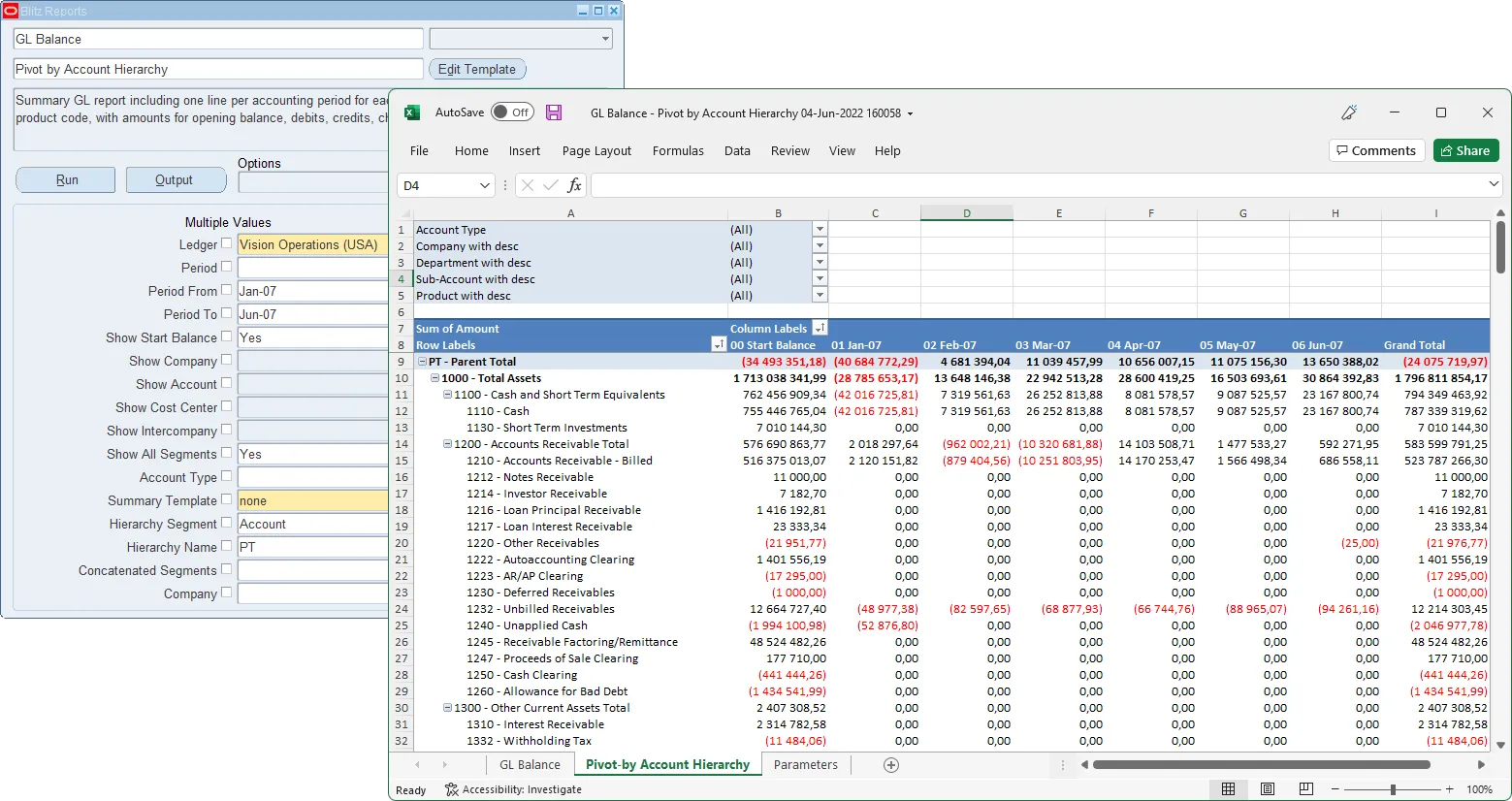
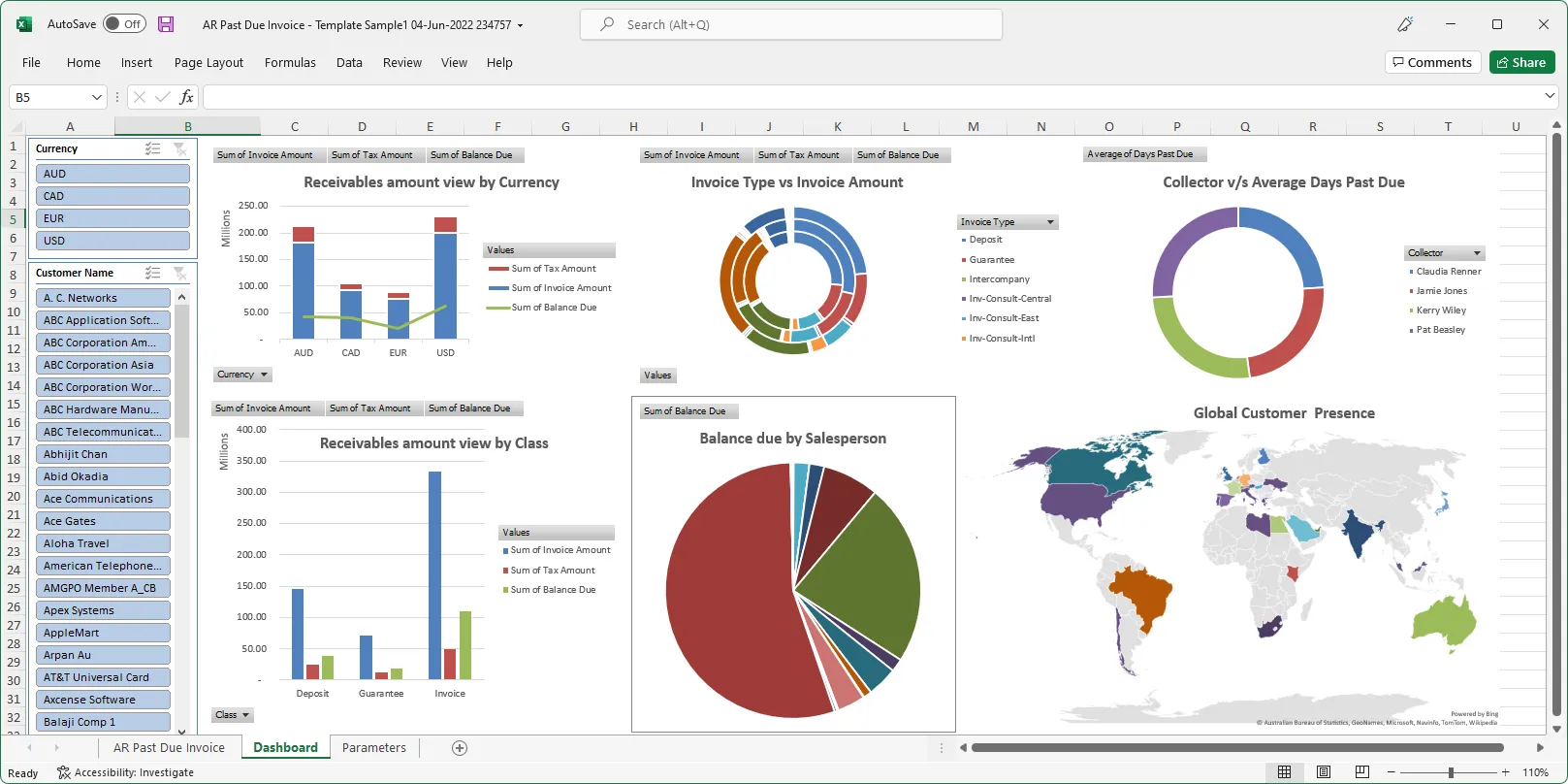
The Excel template upload functionality in Blitz Report allows users to create their own layouts by uploading an Excel template with additional sheets and charts, automatically refreshed when the report runs again. This allows to create custom dashboards and more advanced visualizations of report data.
You can download and use Blitz Report free of charge for your first 30 reports.
The installation and implementation process usually takes less than 1 hour; you can refer to our installation and user guides for specific details.
If you would like to optimize your Oracle EBS implementation and or operational reporting you can visit www.enginatics.com to review great ideas and example usage in blog. Or why not try for yourself in our demo environment.
Blitz Report™ – World’s fastest data upload and reporting for Oracle EBS
Oracle Discoverer replacement – importing worksheets into Blitz Report™
Blitz Report™ Questions & Answers
Supply Chain Hub by Blitz Report™
© 2025 Enginatics