None
Notification Status, Begin Date From, Begin Date To
wf_notifications, wf_item_types_vl, wf_lookups, wf_item_activity_statuses
If you would like to try one of these Oracle EBS SQLs without having Blitz Report installed, note that some of the reports require functions from utility package xxen_util.
www.enginatics.com/reports/wf-notifications/
Blitz Report™ import options
The WF Notifications report is a crucial operational monitoring and troubleshooting tool for Oracle Workflow. It provides a comprehensive listing of all workflow notifications, detailing their status (e.g., OPEN, CLOSED, CANCELED), recipients, and associated workflow processes. This report is indispensable for system administrators, functional analysts, and business users to manage the high volume of notifications, identify overdue or errored items, ensure timely task completion, and maintain clear communication throughout automated business processes in Oracle E-Business Suite.
Oracle Workflow notifications are fundamental for driving business processes, alerting users to pending tasks (e.g., approvals, information requests), and communicating status changes. However, managing these notifications effectively can be a significant challenge:
- Notification Overload: Users can receive a large volume of notifications, making it difficult to prioritize and manage their workload, potentially leading to missed deadlines or ignored critical tasks.
- Identifying Stuck/Unread Items: Without a consolidated view, it's challenging for managers and administrators to identify notifications that are overdue, unread, or stuck in a particular status, leading to process bottlenecks.
- Delayed Task Completion: Notifications often represent actionable tasks. Delays in addressing these tasks can directly impact business cycles, such as slowing down PO approvals or delaying invoice processing.
- Troubleshooting Notification Delivery: When users report not receiving notifications or experiencing issues with their workflow tasks, diagnosing the problem requires precise information on notification status and history.
- Audit and Compliance: For critical processes, an auditable record of notification delivery and action (or inaction) is required to demonstrate compliance and accountability.
This report offers a powerful, consolidated, and actionable solution for monitoring Oracle Workflow notifications, enabling proactive management and accelerated troubleshooting.
- Comprehensive Notification Overview: It presents a detailed list of all workflow notifications, including their subject, status, recipient, associated workflow item, and key dates. This provides a clear, at-a-glance understanding of notification activity.
- Status-Driven Monitoring: The
Notification Statusparameter is crucial, allowing users to filter for specific statuses (e.g., 'OPEN' for outstanding tasks, 'CLOSED' for completed items, 'ERROR' for problematic notifications), directing attention to critical areas. - Timely Task Management: By identifying aging or overdue notifications (using
Begin Datefilters), managers can proactively follow up with recipients to ensure timely completion of tasks, preventing process bottlenecks. - Enhanced Troubleshooting: When notification or workflow issues arise, this report provides immediate insight into the status and details of notifications, helping to quickly pinpoint and resolve delivery or processing problems.
The report queries core Oracle Workflow tables that store notification details and their associated workflow items.
- Primary Tables Involved:
wf_notifications(the central table for all workflow notifications, storing subject, recipient, status, and dates).wf_item_types_vl(for workflow item type definitions, providing context like 'PO Approval', 'AP Invoice Approval').wf_lookups(for translating various lookup codes into user-friendly descriptions).wf_item_activity_statuses(links notifications to specific activities within a workflow item).
- Logical Relationships: The report selects notification records from
wf_notifications. It then joins towf_item_types_vlto provide context about the type of workflow the notification belongs to. Further joins towf_lookupsandwf_item_activity_statusesenrich the output with descriptive status information and links to the underlying workflow activity, providing a complete picture of each notification's lifecycle.
The report offers flexible parameters for targeted notification monitoring:
- Notification Status: A crucial parameter that allows users to filter for specific notification statuses (e.g., 'OPEN', 'CLOSED', 'CANCELED', 'ERROR'). This enables focused monitoring of problematic or outstanding items.
- Date Range:
Begin Date FromandBegin Date Toare essential for analyzing notification activity over specific periods, helping to identify trends or review historical notification volumes.
As a transactional report querying potentially large volumes of workflow notifications, it is optimized by efficient filtering and indexing.
- Status and Date-Driven Filtering: The
Notification StatusandBegin Date From/Toparameters are critical for performance, allowing the database to efficiently narrow down the large volume ofwf_notificationsrecords to only those relevant to the current analysis, leveraging existing indexes. - Indexed Joins: The queries leverage standard Oracle indexes on
item_type,item_key,recipient_role, andstatusfor efficient data retrieval across workflow tables.
1. What is the lifecycle of a typical workflow notification?
A typical lifecycle starts with OPEN (notification sent, awaiting action). It might then go to RESPONDED (user has taken action), FORWARDED, CANCELED, or CLOSED (task completed or no longer relevant). If an error occurs, it might go to ERROR status.
2. Can this report help identify notifications that require urgent attention?
Yes. By filtering for Notification Status = 'OPEN' and sorting by Begin Date (oldest first), managers can quickly identify notifications that have been outstanding for the longest time and require urgent follow-up, preventing delays in critical business processes.
3. Is it possible to see the content or details of the notification message from this report?
While this report shows the notification Subject and basic status, the full content of the notification message (which can include dynamic data and actionable links) is typically stored in separate CLOB columns within wf_notifications or related tables. While possible to include, it would require custom configuration to extract and display the full message body.
Oracle E-Business Suite Reporting Library
We provide an open source Oracle EBS SQLs as a part of operational and project implementation support toolkits for rapid Excel reports generation.
Blitz Report™ is based on Oracle EBS forms technology, and hence requires minimal training. There are no data or performance limitations since the output files are created directly from the database without going through intermediate file formats such as XML.
Blitz Report can be used as BI Publisher and Oracle Discoverer replacement tool. Standard Oracle BI Publisher and Discoverer reports can also be imported into Blitz Report for immediate output to Excel. Typically, reports can be created and version tracked within hours instead of days. The concurrent request output automatically opens upon completion without the need for re-formatting.
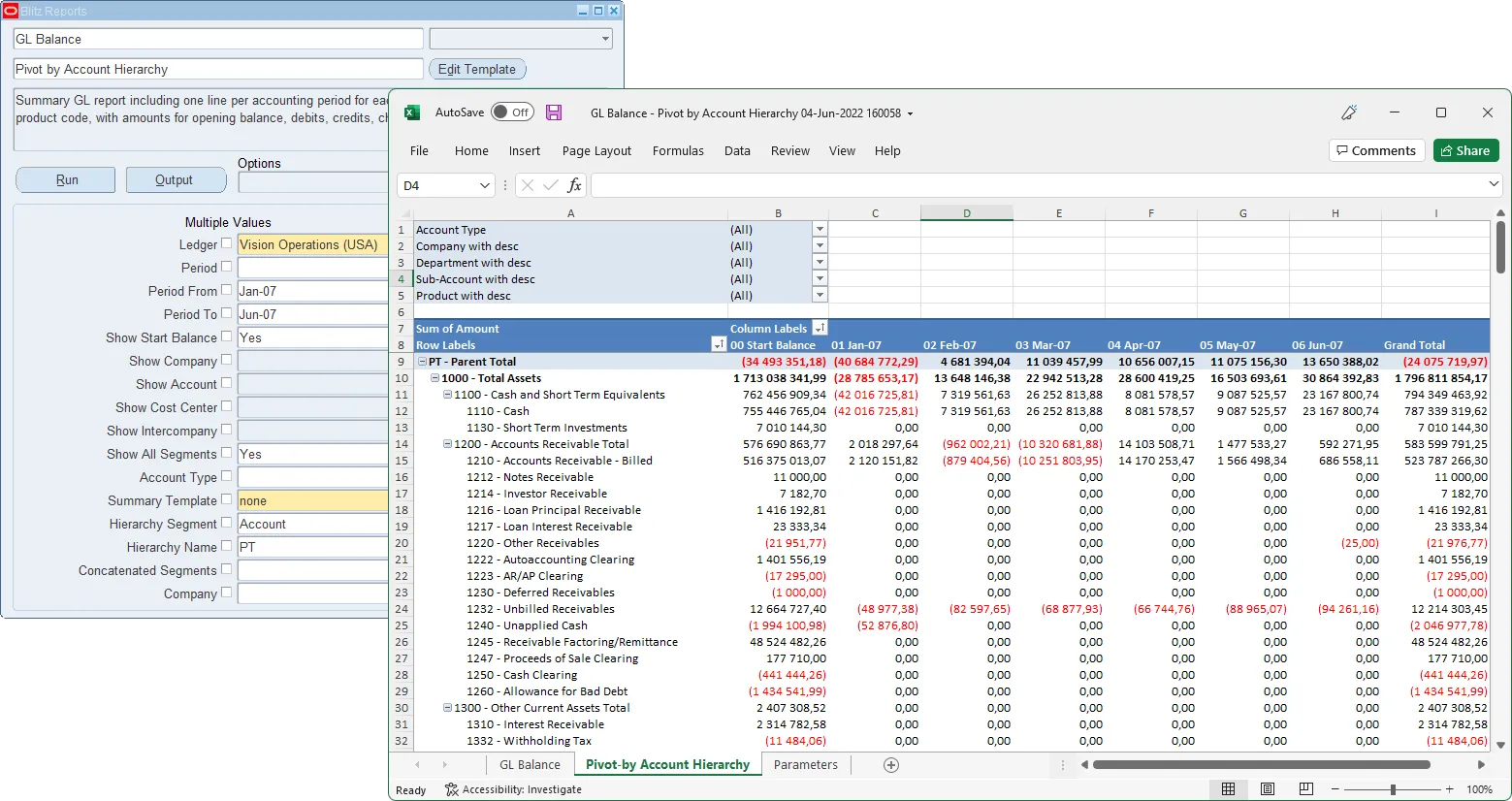
The Filters, Columns, Rows and Values fields are used to create and deliver the data in pivot table format with full drill down to details.
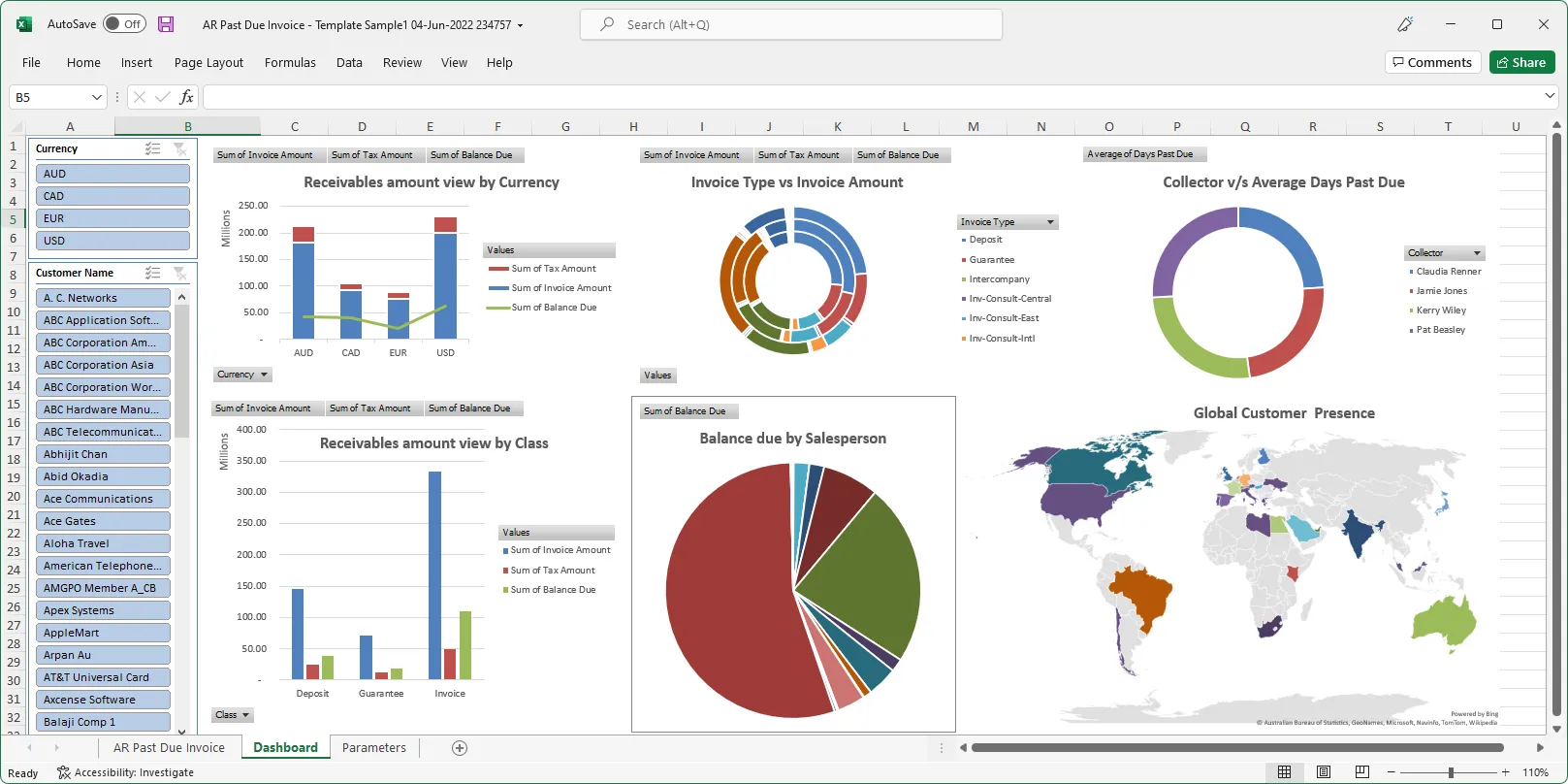
The Excel template upload functionality in Blitz Report allows users to create their own layouts by uploading an Excel template with additional sheets and charts, automatically refreshed when the report runs again. This allows to create custom dashboards and more advanced visualizations of report data.
You can download and use Blitz Report free of charge for your first 30 reports.
The installation and implementation process usually takes less than 1 hour; you can refer to our installation and user guides for specific details.
If you would like to optimize your Oracle EBS implementation and or operational reporting you can visit www.enginatics.com to review great ideas and example usage in blog. Or why not try for yourself in our demo environment.
Blitz Report™ – World’s fastest data upload and reporting for Oracle EBS
Oracle Discoverer replacement – importing worksheets into Blitz Report™
Blitz Report™ Questions & Answers
Supply Chain Hub by Blitz Report™
© 2025 Enginatics