On current-gen hardware (Bittle X, Nybble Q) or starting fresh? This repo covers the legacy NyBoard platform. Head to OpenCatESP32 for current hardware and active development, or buy Bittle X on Amazon.
🚀 Quaddle — Petoi's newest OpenCat-lineage quadruped — launches on Kickstarter August 2026. Reserve your spot → (details below)
OpenCat is an open-source Arduino and Raspberry Pi-based framework for building and programming quadruped robots. Developed by Petoi, the maker of futuristic programmable robotic pets, it's the framework behind two mini robot kits: the Bittle robot dog and the Nybble robot cat.
The framework handles the hard parts — gait coordination, servo control, IMU integration — so you can focus on what you're actually building on top of it.
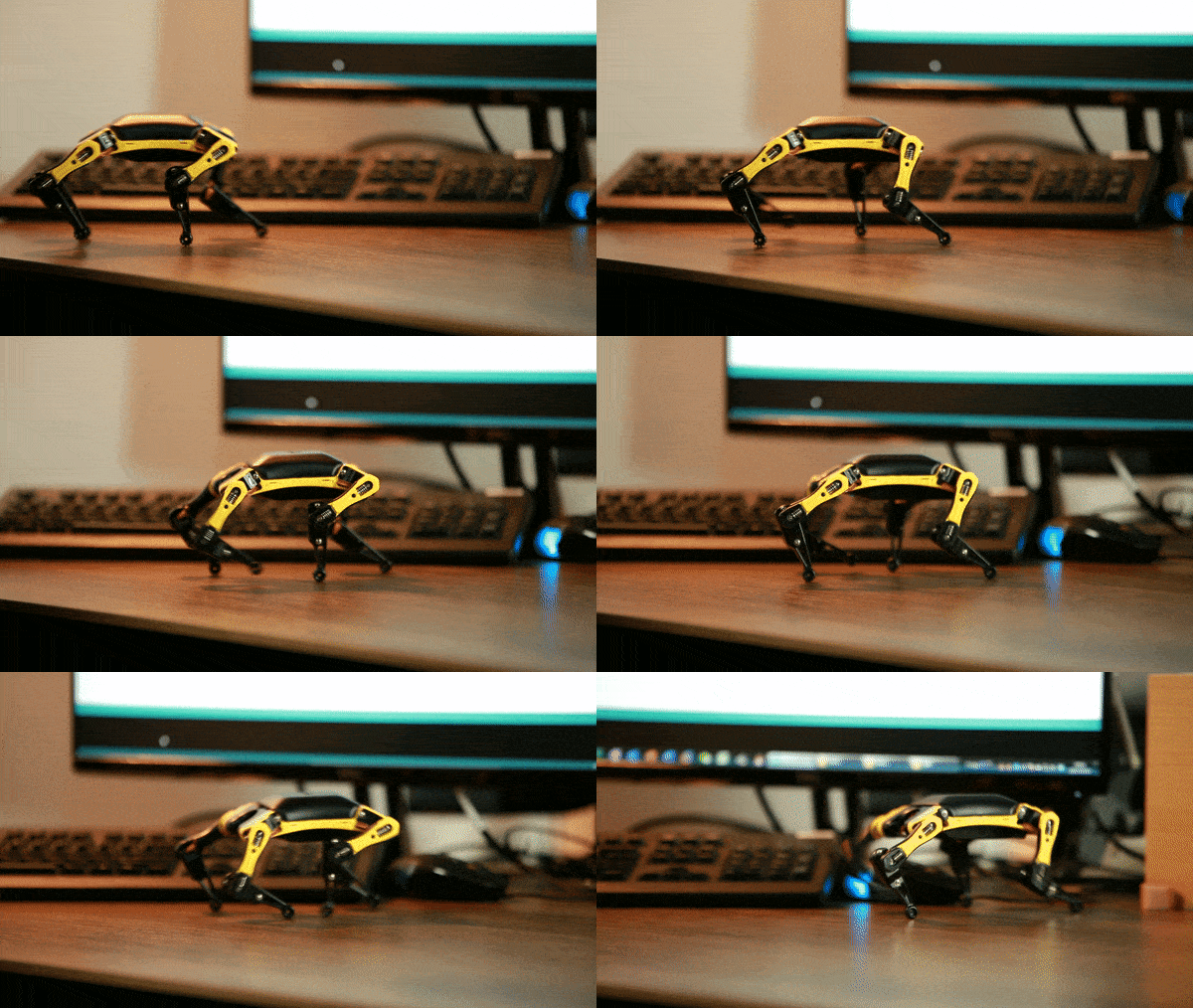
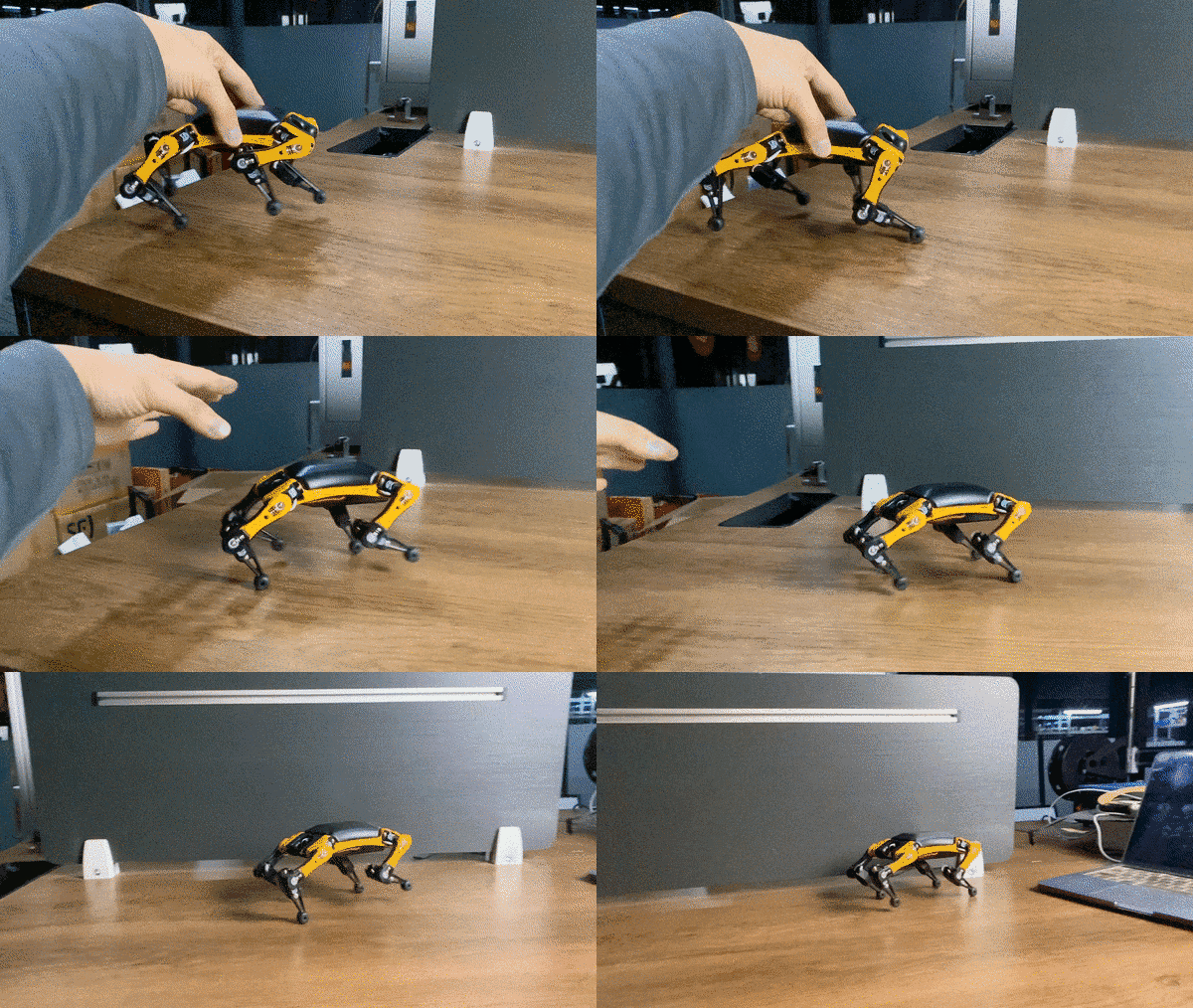

Quaddle is Petoi's newest quadruped, launching on Kickstarter August 2026 — a mini desk robot built on the same OpenCat lineage as Bittle and Nybble. What makes it worth a look: it's a full quadruped running on just 4 servos instead of the usual 8–12, which forces genuinely different gait-design and leg-coordination solutions to still get all four legs walking, running, and balancing. Its servos are also position-feedback — readable, not just drivable — which is what makes Puppet Mode possible: hand-guide the legs and record a motion directly, no code required to capture a new behavior. We'll also share 3D-printable shells and mounts for customization. Same open platform this repo already supports for gait research, RL, and sim2real work — a hands-on physical AI platform, not a toy version of the idea.
Source code is not yet public. It's an upgraded version of the OpenCat project. The ESP32-S3 code structure is similar to this repo and closer to OpenCatESP32, which already powers thousands of Bittle X and Nybble Q robots in the field. We plan to open source it before Quaddle delivery. Watch this repo and r/petoi for the announcement, or reserve a spot to get notified at launch.
Inspired by Boston Dynamics' Spot, Dr. Rongzhong Li started OpenCat in his dorm at Wake Forest University in 2016. The goal was straightforward: make agile quadruped robots affordable and hackable enough for researchers, educators, and makers — not just well-funded labs.
Since then:
- 30,000+ robots shipped, cumulative across all channels
- 60+ countries
- $1M+ raised across two prior Kickstarter and Indiegogo campaigns
- 20+ academic papers cite the platform — see Research Spotlight
- One of the most-starred open-source quadruped robot projects on GitHub
OpenCat is now deployed across two robot platforms and used in K-12 schools, university research labs, maker spaces, and independent projects worldwide.
- 🐶 Bittle X — mini robot dog & AI robotics kit with voice control — current generation, BiBoard/ESP32
- 🐱 Nybble Q — mini robot cat & AI robotics kit — current generation
The original Bittle and Nybble mini robots (NyBoard/ATmega328P) are discontinued but still fully supported by this codebase. This repo is the right place for NyBoard users; for ESP32/BiBoard see OpenCatESP32.
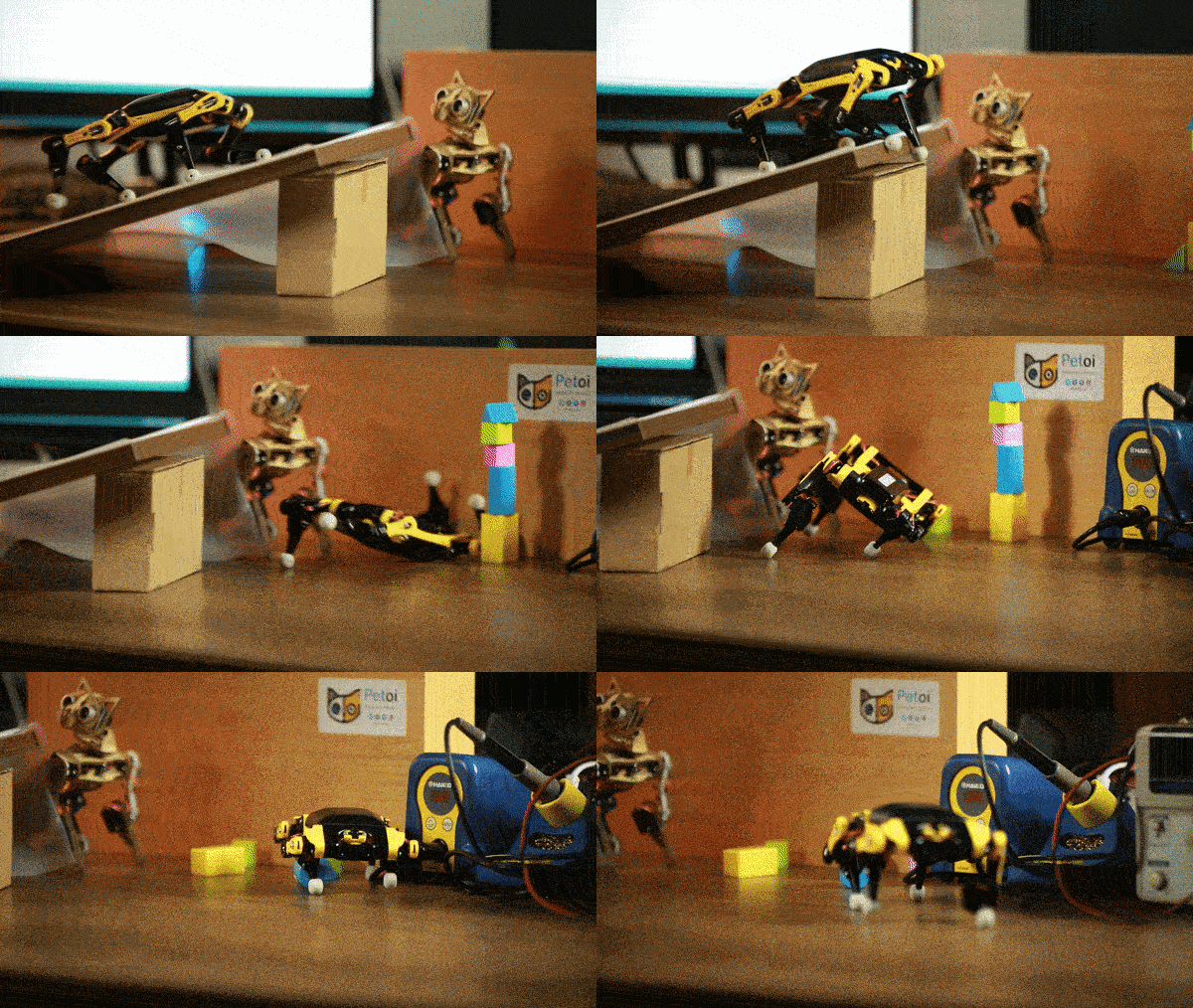
- Multi-language: C/C++, Python, block-based coding
- Open hardware + software: fork, modify, extend — no vendor lock-in
- Arduino + Raspberry Pi native: works with the tools you already use
- Sensor integration: cameras, touch, IMUs, ultrasonic, etc. — clip and go
- Sim-to-real: experiment reinforcement learning models on an affordable robot
- ROS compatible: SLAM, navigation, and perception pipelines documented by the community
Whether you're teaching robotics programming for the first time, building a weekend hackathon project, or running a graduate-level embodied robotics experiment, the platform scales.
Users have shipped real robotics projects across AI, Raspberry Pi, and research — a few highlights:
- Autonomous movement & object detection
- Raspberry Pi robotics projects
- AI and computer vision applications
- NVIDIA Isaac simulations and reinforcement learning
- Visual and LiDAR-based SLAM with ROS
- Imitation learning with Tiny ML models
- IoT robot fleet management with AWS
- 3D-printed accessories and custom builds
- DIY 3D-printed robot pets on OpenCat
Academic and research use cases: Research Spotlight
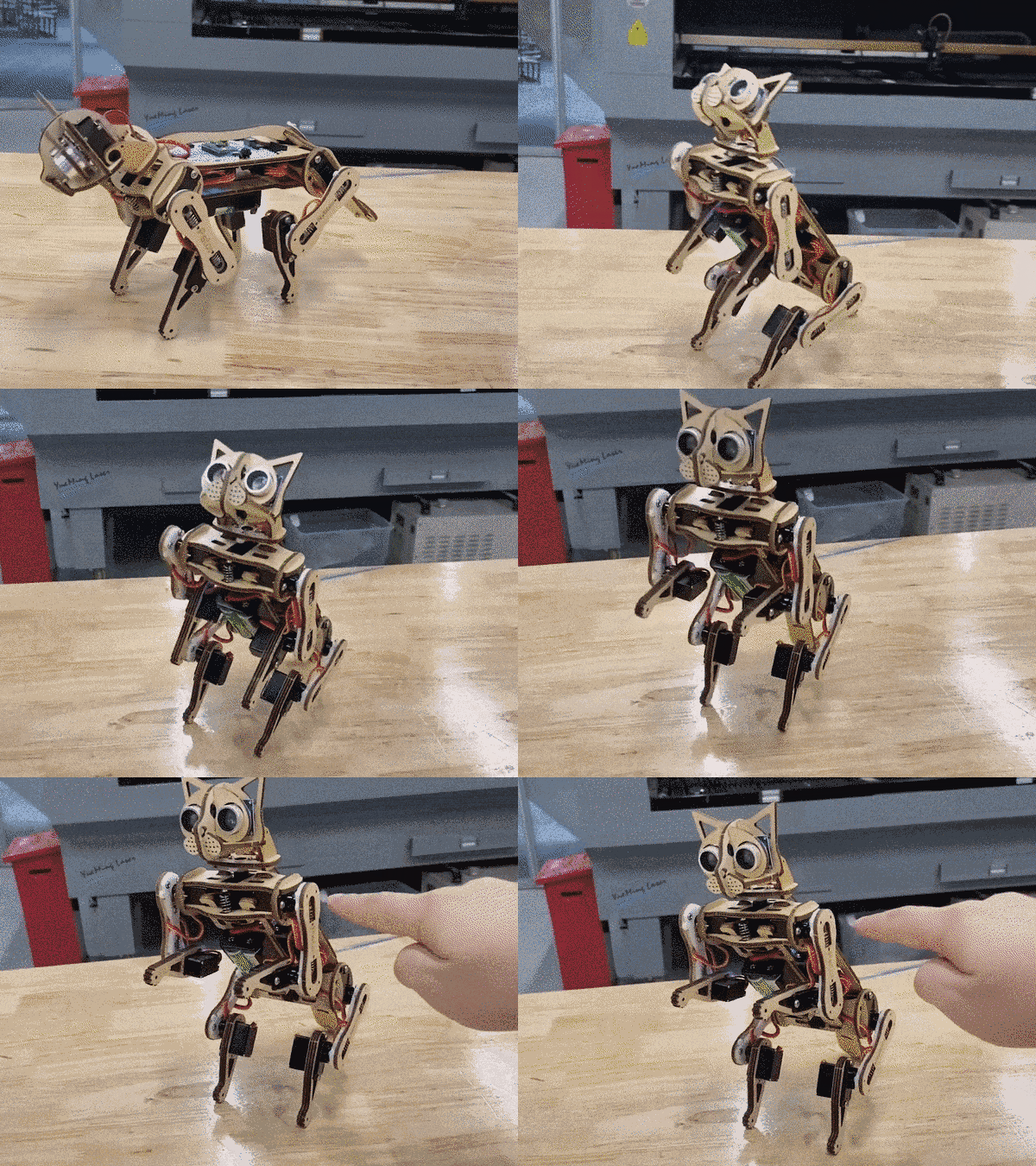
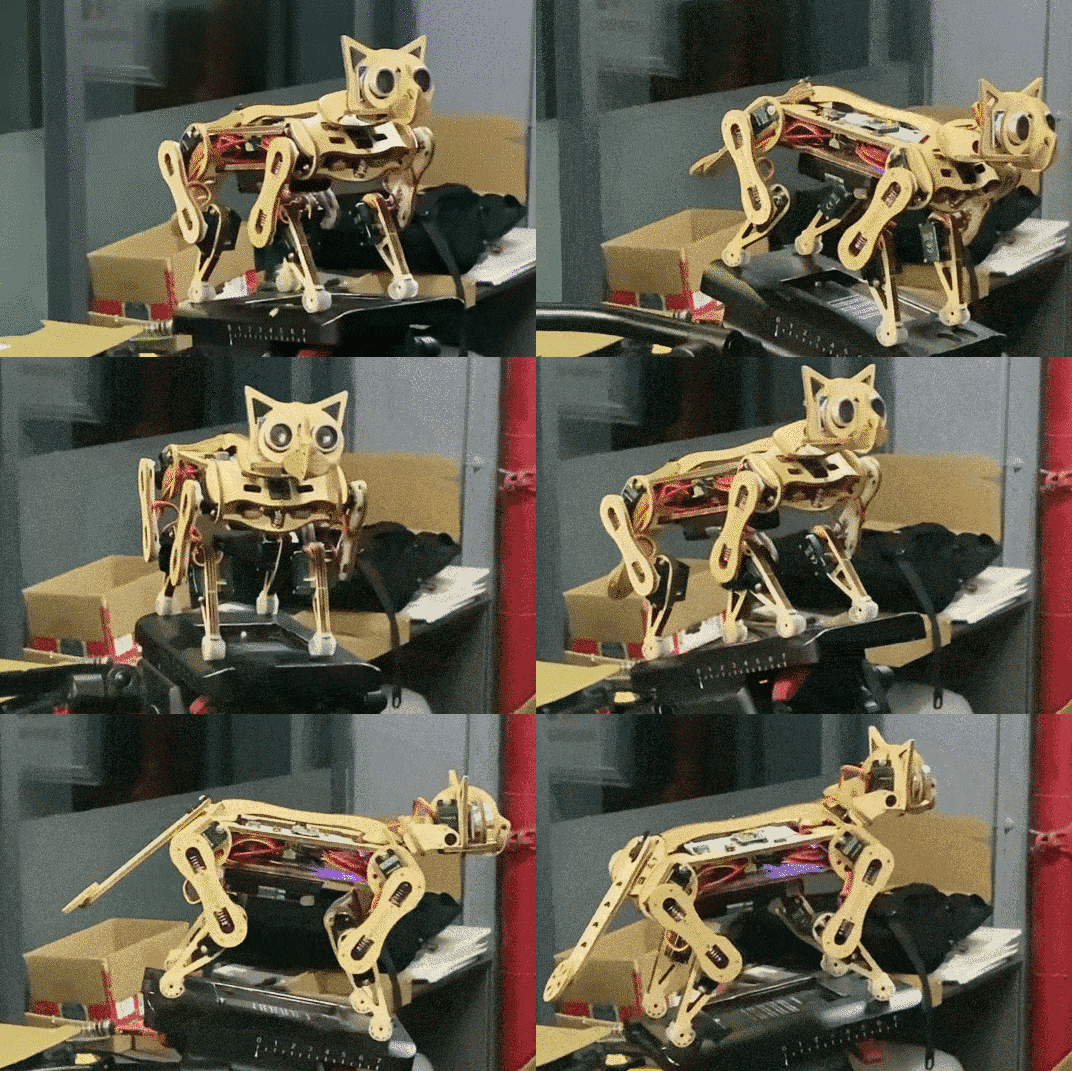
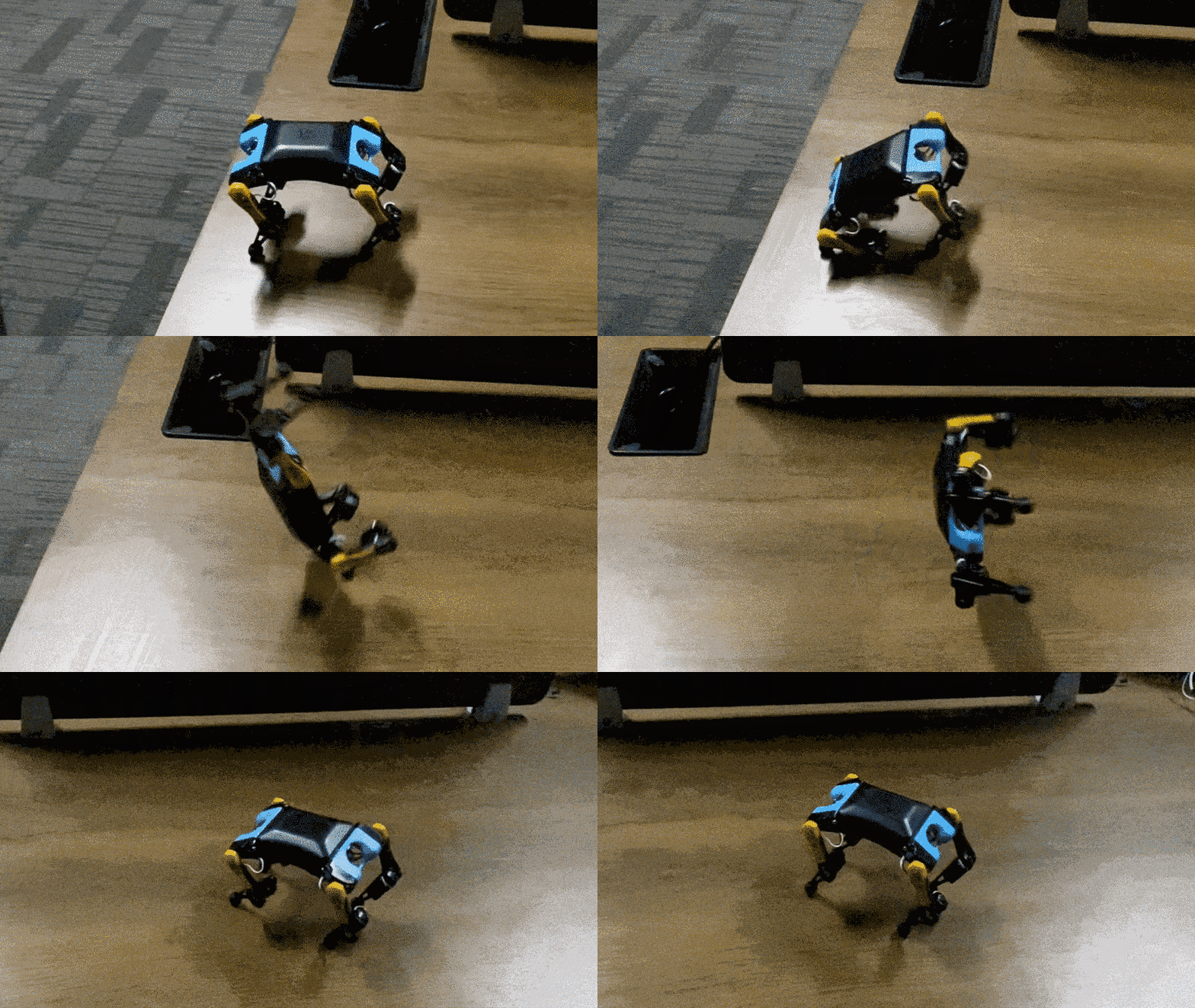
This repo targets the NyBoard — a customized Arduino board based on ATmega328P. It coordinates up to 12 high-performance servos for walking, running, jumping, and backflipping.
Extend with:
- Sensor pack
- Intelligent camera module
- Raspberry Pi, Nvidia Jetson Nano, or other AI co-processors via wired/wireless connections
For ESP32/BiBoard (current-gen hardware), see OpenCatESP32.
Full documentation: Petoi Doc Center The following steps give you a brief walk-through, but may miss detailed tips and illustrative pictures.
1. Clone the repo
Remove the -main (or branch name) suffix from the folder after downloading.
2. Open OpenCat.ino — select your robot and board
#define BITTLE    // Petoi 9 DOF robot dog: 1x on head + 8x on leg
//#define NYBBLE  // Petoi 11 DOF robot cat: 2x on head + 1x on tail + 8x on leg

//#define NyBoard_V0_1
//#define NyBoard_V0_2
#define NyBoard_V1_0
//#define NyBoard_V1_1
3. Enter configuration mode
Comment out #define MAIN_SKETCH, upload, follow serial prompts.
// #define MAIN_SKETCH4. (Optional) Auto-init
#define AUTO_INIT skips prompts and auto-calibrates IMU — handy for repeated flashing.
5. Upload
Plug USB uploader into NyBoard, install driver if needed, hit upload (→) in Arduino IDE.
6. Serial Monitor
Set to no line ending and 115200 baud rate.
7. Reset joint offsets
Reset joint offsets? (Y/n)
Y
8. IMU calibration
Calibrate the IMU? (Y/n):
Y
Place the robot flat on a table. 6 long beeps → reads sensor data → saves offsets → beeps when done. Close Serial Monitor when Ready! appears.
9. Switch to main sketch
#define MAIN_SKETCHUncomment and re-upload.
10. Joint calibration
Boot with one side up to enter calibration mode, or calibrate directly via Serial Monitor.
11. Optional: Petoi app
Plug in Bluetooth dongle for a friendlier calibration UI:
- iOS: App Store
- Android: Google Play
See the calibration guide and app guide.
12. Start building
Infrared remote, Petoi app, Python, or Serial Monitor. Full play guide →
OpenCat shows up in AI robotics education across K-12 programs, community colleges, university labs, and maker spaces — hands-on physical AI teaching that goes beyond screen-based coding exercises:
- r/OpenCat — firmware code, framework hacking, extending and porting OpenCat
- r/Petoi — hardware Q&A, builds, quadruped coding, curriculum, 3D-printed parts, general discussion
- Advanced tutorials by the community
- GitLab embedded DevOps workshop with Bittle X
- Talking Petoi robot dog with Azure AI Model Inference API integration
- Talk to Bittle robot dog with ChatGPT
- Research spotlight
- Robot gallery
- FAQ
Follow the project: YouTube · Twitter · Instagram · Facebook · LinkedIn
The legacy OpenCat repository is archived and no longer maintained.